

























































A Venezuelan immigrant detained by ICE agents on an Ogden street in late August while a local police officer looked on has been ordered released from federal custody, after a judge ruled the arrest violated his constitutional rights. The man had been making a food delivery when immigration agents pursued him, and he was later transferred to a detention facility in California where he remained for weeks before his lawyer intervened.
Attorney Sergio Garcia said a federal district court judge in California ordered his client's release on Wednesday, after Garcia filed a habeas corpus petition challenging the detention. According to KSL News, the petition challenged the man's detention, and the judge ruled it unconstitutional. The man now faces deportation but is expected to pursue his asylum case in federal immigration court while out of custody, Garcia said.
The case traces back to Aug. 25, when an Ogden police officer responding to an unrelated call about an aggressive dog near 22nd Street and Porter Avenue was approached by an ICE agent driving an unmarked SUV. Per body camera footage released by the Ogden Police Department, the agent asked the officer to perform a traffic stop on a gold vehicle; the officer declined. The Venezuelan man, who was behind the wheel making a food delivery, and the ICE agent both then asked the same officer for assistance as the pursuit played out on the street, according to the station's reporting.
A Community Watches an Arrest Unfold
Ogden City Council member Kevin Lundell recorded part of the encounter on his phone, and that footage was later posted to social media alongside the department's own body camera video. The viral clips set off days of public anger in Ogden over what role, if any, local officers should play when federal agents show up unannounced during routine calls.
Garcia told the outlet he remains unsure what triggered immigration authorities to pursue his client in the first place, and he maintained that agents had no legitimate reason to detain the man. The attorney also said he does not know how authorities tracked or located his client, who came to the United States from Venezuela in 2022, had previously applied for asylum, and had been granted a work permit. Federal officials have said the man was in the country illegally, but did not respond to a request for comment as of Wednesday.
Ogden Pushes Back on Formal ICE Partnerships
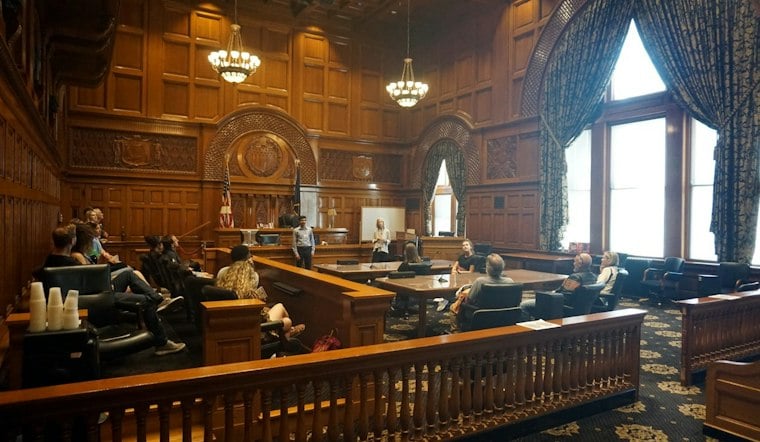
The confrontation forced a reckoning at Ogden City Hall. A Sept. 1 City Council meeting on local officers' interactions with federal immigration agents grew heated enough that it required a brief recess amid audience outbursts, and Mayor Ben Nadolski told residents the city was actively drafting a formal policy to govern how police respond when ICE operations intersect with municipal calls, according to KSL News's coverage of the meeting.
Days later, Ogden Police Chief Jake Sube and Nadolski publicly reiterated that the city will not enter into a formal 287(g) agreement with ICE to deputize local officers for immigration enforcement. Under federal law, local police are barred from performing civil immigration arrests or serving administrative federal warrants unless their jurisdiction has signed such an agreement with ICE, which left the Ogden officer on Aug. 25 in an ambiguous position with no legal authority to act on the agent's request.
Utah had 16 active 287(g) agreements as of late 2025, part of a broader Mountain West trend in which local-federal ICE partnerships increased fivefold, according to the Mountain West News Bureau. That friction is not unique to Ogden: the North Valley Police Department in Sanpete County announced in October it was reconsidering its own 287(g) accord after ICE agents detained five people during joint ride-alongs, with officials there saying the tactics did not align with the department's values.
Questions Over the Unmarked Vehicle
The ICE agent's use of an unmarked SUV to pursue the vehicle also stands in contrast to state rules for local police. Under Utah Senate Bill 262, enacted this year, Utah law enforcement agencies are prohibited from using unmarked patrol vehicles as the primary means for routine traffic stops, underscoring the operational gap between how federal agents and local officers are expected to conduct stops on Utah streets.
Conditions at the California Facility
After his arrest, the man was transferred to the Adelanto ICE Processing Center in California, a 2,644-bed complex the U.S. Department of Homeland Security purchased this October for $950 million from private prison operator The GEO Group. The facility has drawn scrutiny well before that sale: four people had died at Adelanto since the prior year, according to the Los Angeles Times.
Garcia's habeas petition, filed in California federal court where his client was being held, succeeded in securing the man's release this week. He is now expected to continue fighting his case in federal immigration court as the broader debate over local-federal immigration cooperation continues to play out in Ogden City Hall and beyond.



