

























































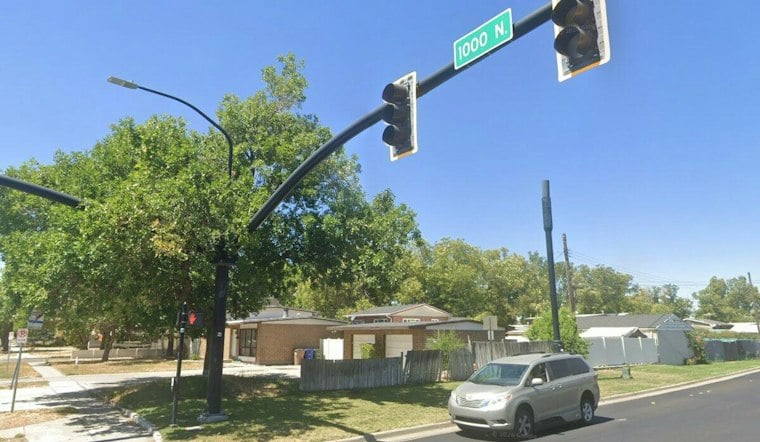
A large tree in the front yard of a vacant Rose Park home for sale simply vanished over the summer, and the woman who listed the property still has no idea who removed it or why. Cindy Maestas, a Rose Park resident who listed her parents' home for sale, says she noticed the tree missing and immediately assumed a family member had taken care of it.
She called her brother to ask if he had hired someone to remove the tree and how much it cost. His answer surprised her: “I don't know what you're talking about!” As reported by KUTV, it wasn't until the home sold and months later that Maestas realized something might be off. The house has since sold, but she still does not know who took the tree down.
A State Official Points to a Familiar Scheme
Daniel Larsen, interim division director of the Utah Division of Consumer Protection, told the station the situation could have involved a check overpayment scam. His office, however, has not received any reports tied to this specific incident. Larsen's office described the general mechanics of the scheme: a scammer sends a check for more than a product or service actually costs, then asks the recipient to send the excess money back.
The trouble surfaces later. The original check, often drawn from an account tied to identity theft or fraud, eventually bounces — but only after the victim has already wired or returned the extra cash. Larsen's warning on the general pattern was blunt: being sent too much money for something is almost always a scam.
How the Scheme Can Target Vacant Properties
Vacant homes make an appealing target for this kind of fraud because there's often no one watching the property day to day. According to the Federal Trade Commission, home improvement scams more broadly can involve shoddy work, property damage, overcharging, or simply taking money without performing any service at all. A separate account published by Farrah Spears Realty Solutions describes vacant-home scams as generally falling into two categories: someone impersonating the property owner to hire contractors, or a scammer sending an overpayment and then requesting a refund.
That same account details an incident in which a tree company believed it had authorization after someone claiming to be the homeowner contacted the business and name-dropped the listing agent. The scammer allegedly sent payment exceeding the agreed-upon amount and asked for a refund, leaving the tree company facing a loss once the original payment turned out to be fraudulent. It is not established whether that case involved the same people, company, or method as the Rose Park incident — the two situations are not confirmed to be connected.
In a different example from that same account, a plumbing company took a more cautious approach, contacting the listing agent directly to ask, “Can you verify whether this person is actually connected to the property?” before accepting any payment. Larsen echoed that caution for businesses working on vacant homes, saying they should verify both the identity of the person they're working with and whether that person actually has authority to approve the work.
Maestas Hopes Her Story Serves as a Warning
Larsen also warned that doing work without confirming identity and authorization could create significant legal problems for a business down the line. For her part, Maestas warned tree companies to protect themselves against this kind of scheme, and said she hopes her experience serves as a warning to anyone buying, selling, or arranging tree trimming on a property that isn't actively occupied.
Anyone who suspects they've been targeted by a check overpayment scam can file a complaint with the Federal Trade Commission at www.ftc.gov or by calling 1-877-FTC-HELP, according to guidance published by the Connecticut Department of Consumer Protection. As for the Rose Park tree itself, it remains an open question — the Utah Division of Consumer Protection has received no reports tied to the incident, and no suspect has been identified.





