

























































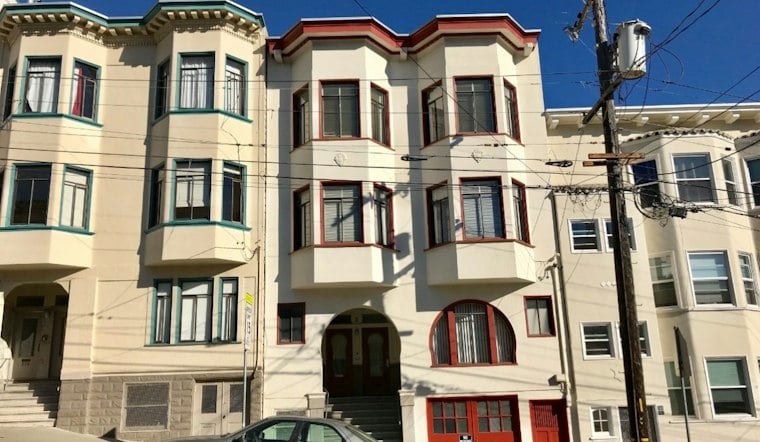
A San Francisco scientist's Reddit post about her apartment hunt pulled in more than 1.5 million views in three days this fall, and she's far from alone. Across the city, nurses, scientists, teachers and longtime residents are posting their rental horror stories online, describing a market where eviction notices are on pace to hit their highest number in a decade and two-bedroom rents have cracked $6,000 a month for the first time ever.
Sonja Mihailovic, who works as a scientist and moved to the Bay Area in 2024 to pursue a career in cell therapy, told her story in a Reddit post that, according to SFGATE, drew more than 1,000 comments alongside its viral view count. Mihailovic said she contacted at least 36 rental listings and spent six months searching without finding a place that met her needs, and later took a break from searching. At viewings, she and her friend, nurse Zorica Bruic, regularly found themselves competing against at least 10 other hopeful renters. “I thought I did everything right that I was supposed to do, and I still can’t afford to step foot in the city,” Mihailovic said. She added, “This inequality is becoming unreal and unsustainable,” per the same account.
Her frustration echoes the city's own numbers. San Francisco eviction notices increased 44% this year, part of what the outlet's reporting describes as a trend putting the city on pace for its highest eviction count in a decade. SFGATE reported more than 1,000 eviction notices filed, a 44% jump over the prior year, according to the San Francisco Rent Board.
Rent Protections Leave Many Units Exposed
Mihailovic's situation reflects a structural quirk at the heart of the crisis: around 70% of San Francisco's rental housing is rent-controlled, per the San Francisco Tenants Union, but that protection excludes single-family homes and any apartment building constructed after 1979. Newer stock falls outside local rent protections. Sonja Mihailovic and her roommate ran into a similar wall when they applied for a home in the Inner Sunset, only to have the landlord raise the proposed rent $250 above the original listing price — a unit that had rented for $1,500 less back in 2024.
Priced Out of the Neighborhood He Grew Up In
Sean Taylor was born in San Francisco's Outer Sunset and left to pursue a Ph.D. in North Carolina, but he and his girlfriend moved back to the city this past June hoping to settle down near family. Instead, the couple found a rental across the bridge in Mill Valley through Craigslist, while Taylor's girlfriend works as a fourth-grade teacher. “The goal really was to be back home to be near my family,” Taylor said, according to SFGATE's reporting.
San Francisco rents began climbing in 2024 and have now risen 25% since last year, a surge the outlet ties to the artificial intelligence boom combined with a persistent housing undersupply. San Francisco two-bedroom rents topped $6,000 a month in 2026 for the first time ever, per Zumper data cited in the reporting.
City Hall's Response Lags the Crisis on the Ground
Mayor Daniel Lurie declared a citywide rent emergency last month, delivering the declaration in Alamo Square Park and introducing a package of six proposed ordinances alongside more than $30 million in dedicated municipal investments, according to the City and County of San Francisco. “There is no recovery without the people who make San Francisco what it is,” Lurie said, framing the push as an effort to keep teachers, nurses, artists and restaurant workers from being driven out of the city.
One ordinance in the mayor's package would bar landlords from starting nonpayment eviction proceedings against tenants who owe less than one month of federally determined fair market rent, as reported by Smart Cities Dive. The package also earmarks $27 million in local funding to keep rental assistance flowing to roughly 650 extremely low-income households as federal Emergency Housing Voucher funding runs out at the end of the year. Jason Ward, the RAND economist, has cautioned that these measures are aimed mainly at preventing immediate displacement rather than bringing down overall market rents.
A Patchwork of Fixes Against a Deep Supply Gap
City supervisors have been layering on their own responses. Supervisor Danny Sauter and Mayor Lurie introduced legislation in September to cap accumulated “banked” rent increases at 10% annually through 2029 for rent-controlled tenants, as Hoodline reported at the time. Separately, after a 92-year-old Nob Hill tenant was served an eviction notice over apartment clutter, Supervisors Myrna Melgar and Jackie Fielder introduced legislation this month to narrow the legal definition of nuisance evictions.
Underneath all of it sits a statutory ceiling that city lawmakers can't touch on their own. California's Costa-Hawkins Rental Housing Act exempts single-family homes, condos and any building built after February 1995 from local rent caps.



