

























































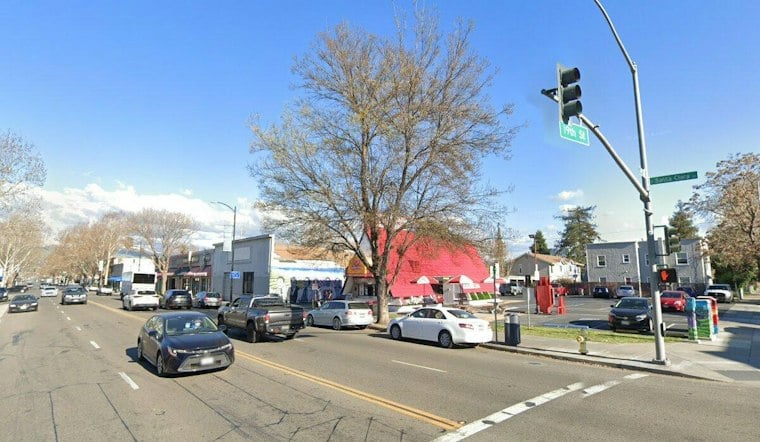
San Jose’s Department of Transportation closed 98% of roughly 10,000 vehicle abatement cases within two weeks, according to the city Auditor’s Office. That measure tracks case resolution, not necessarily a vehicle’s permanent removal: a case can close after an owner moves a car, even if it later returns. Residents including Davide Vieira say the distinction matters on streets where inoperable and abandoned vehicles remain a recurring sight.
A Program That Looks Good on Paper
The audit’s findings, discussed at a San Jose City Council meeting last Tuesday, said the program met its two-week benchmark and its goal of resolving 80% of cases through voluntary compliance after a warning. A case may end with a tow, a citation or the owner moving the vehicle. Residents and city leaders questioned whether those outcomes reflect lasting solutions and called for further reform, as reported by San José Spotlight.
Mayor Matt Mahan said strong performance figures do not necessarily translate into public satisfaction, which remains low when residents’ expectations differ from what the data measures. Abandoned vehicles consistently rank among residents’ top concerns in city surveys. San Jose code enforcement had a customer satisfaction score of 38% in the most recent figures cited in the Spotlight’s reporting.
Roosevelt Park Resident Sees No End in Sight
Davide Vieira, who lives near Roosevelt Park, estimates that at least five abandoned or inoperable vehicles are within a few blocks of his home at any given time. He has reported hundreds over the years, but says he now focuses on vehicles missing parts or damaged badly enough to appear unusable on the street. In the Spotlight’s account, Vieira described the problem as persistent.
Warnings do not always lead to a lasting change: owners may move a vehicle and return it to the same spot within days, restarting the process, according to the Spotlight’s reporting. A case can therefore be formally closed even as a vehicle remains on a roadway or returns, leaving residents with blocked parking and recurring neighborhood blight.
Legal Limits and a Tiered System
San Jose adopted a tiered priority approach to vehicle abatement in 2022, directing limited enforcement resources toward vehicles that appear visibly damaged or inoperable rather than those simply parked in one place for an extended time. The city also began proactive street inspections. The Department of Transportation can tow a vehicle that has not moved in 72 hours, but enforcement is constrained when a vehicle does not meet the legal criteria for abandonment, the Spotlight reports.
City transportation policy documents indicate the scale of the workload: before the pandemic, the department received 55,000 to 60,000 vehicle abatement requests annually, and 7% to 8% of cases ended in a tow, according to San José Spotlight’s coverage of the policy overhaul. The revised approach prioritizes cases by vehicle condition and likelihood of towing, and requires photographic evidence with reports.
What the figures show about enforcement
Some measures suggest the tiered approach changed how staff handled reports, but they do not establish how common abandoned vehicles were. San José Spotlight reported that calls in which a vehicle was gone by the time staff arrived fell from 25,000 between March 2019 and February 2020 to 2,600 between March 2021 and February 2022. A San Jose city staff report said more than 1,000 vehicles were towed through the Abandoned Vehicle Program from June through August 2023, and approximately 175 were reclaimed; it cautioned that recovery figures can be affected by the costs owners face. The figures describe different stages of enforcement, not whether a vehicle stayed off a street after a case closed.
For residents asking when a warning can lead to a citation or tow, San José Police Department guidance says the city investigates complaints by placing a warning notice and following up after 72 hours. If evidence confirms that a vehicle is stored on a public street beyond that period or is abandoned, it may be ticketed or towed.
Councilmembers Push for Clearer Answers
Councilmembers responding to the audit called for transportation staff to explain case outcomes more clearly, including when a case closes without enforcement. The department is also expected to set new response-time benchmarks and develop a way to track vehicles reported repeatedly; staff currently lack the capacity to monitor repeat problem vehicles over time.
Transportation staff are expected to update the council in April 2027 on the reforms. John Ristow, representing the department, accepted the councilmembers’ recommendations and other suggestions in the auditor’s report, saying some improvements are underway and others will begin soon.
A Trust Problem as Much as a Towing Problem
Councilmember Michael Mulcahy said the city’s response matters to public confidence as well as enforcement. He argued that residents should receive responses to their reports and remain engaged even when a problem cannot be fixed immediately. He said he hopes the city has found solutions to an issue that has persisted for years.
San Jose transportation records show Vehicle Abatement had the lowest customer-satisfaction rating of any city 311 service in fiscal year 2021-22: 17% of customers rated it “Good” to “Very Good,” according to a city transportation memo. The memo says satisfaction rose by more than 20 points by the first quarter of fiscal year 2023-24, though city records give different figures: one document lists 41% for that quarter, while a separate status report gives 35% in the first quarter and 40% in the second.
Residents can report unused vehicles through San Jose’s 311 website and app. The city upgraded its 311 mobile app to route abandoned-car complaints to the right department and let residents track complaints and see their outcome, NBC Bay Area reported. Mahan separately told CBS News that the city received more than 6,000 abandoned-vehicle complaints in just the first few months of one year. For Vieira, the measure of progress is whether vehicles near Roosevelt Park are gone when he looks again.





