

























































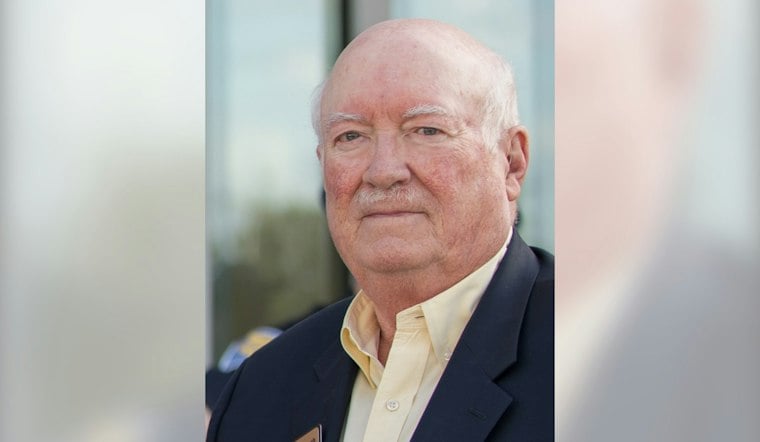
A teacher from Indiana's 11th House District wants to unseat the man who has held the seat for 12 years, and the fight is centered on a single question dividing communities across Jasper, Lake, Newton and Porter counties: who pays for schools, fire departments and local government now that the state has slashed property taxes. Democrat Tyler Bridges is challenging Republican state Rep. Michael Aylesworth, and both candidates ran unopposed in their May primaries, setting up a direct November matchup.
A Rematch Over Property Tax Fallout
As reported by the Chicago Tribune, Bridges is concerned about Senate Enrolled Act 1's effect on local government, describing the law as an ill-envisioned bill that does not set up ways to replace money for schools, fire districts and most local governments. He noted that Lowell is enacting a wheel tax specifically to recoup money lost because of the law. Per the Tribune’s report, the act aims to provide property tax relief to Hoosiers while limiting traditional local-government income.
Aylesworth, who has served in the Indiana House since 2014 and represents portions of Jasper, Lake, Newton and Porter counties according to Indiana House Republicans, chairs the chamber's Agriculture and Rural Development Committee. He acknowledged that local government officials have complained about reduced revenue, but said most have found workarounds to fund services, and that the General Assembly will review the issues in its next legislative session when adopting a new biennial budget, the Tribune reported.
Schools Warn Of Busing And Activity Cuts
Tri-Creek School Corporation has a referendum on the November ballot, and Bridges noted that the district will eliminate busing for all students and cut K-8 extracurricular activities if the referendum fails. The corporation's own materials, per the Tri-Creek School Corporation, describe a proposed operating referendum tax rate of $0.2050 meant to fund its Teaching and Security Program. Indiana schools rely on property tax revenue to pay debt, maintain buildings, operate school buses, pay utility bills and meet other obligations, the Tribune noted.
Tri-Creek is not alone. Statewide, school property tax levies rose 3.2% in 2026 compared with 2025, a slower pace than the 6.5% and 6.9% increases seen in the two prior years, according to the Indiana Capital Chronicle. Districts across the state face a mix of pressures beyond the new tax law, including rising operational costs, declining enrollment and a competitive school-choice landscape, as reported by WFYI. The outlet counted 38 Indiana school districts seeking voter approval for higher property tax rates this fall, with nearly all of them aimed at covering operating expenses such as transportation and teacher salaries — though a separate count from WISH-TV put the number at 40 corporations holding referendums statewide this year, a discrepancy the available reporting does not resolve.
Senior Tax Relief Divides The Candidates
Gov. Mike Braun has proposed eliminating property taxes for senior citizens, a plan that has produced cautious responses from both candidates. Bridges said he would consider eliminating senior property taxes but did not want to harm schools and other local government units, according to the Tribune's report. Aylesworth, for his part, said eliminating the tax requires a replacement that does not damage the state budget, framing property taxes as one leg of what he called a three-legged stool.
The Tribune's report also noted that professional services including haircuts, beauty parlor visits and legal services are currently untaxed in Indiana, and that municipalities — except the smallest towns — may enact their own income tax if their county council opts not to include them in the county tax. Those mechanisms sit alongside the broader statewide trend: state K-12 tuition assistance funding has increased 41% since 2016, a $2.8 billion jump, even as reduced local property tax revenue is expected to mean deferred maintenance, fewer facility upgrades and growing disparities between districts, per the Indiana Capital Chronicle’s reporting.
Education Rankings Become A Campaign Flashpoint
Bridges, who works as a teacher, said Indiana ranks among the bottom 20 states in per-child public education, citing a ranking from the Network for Public Education that placed the state 45th overall. He pointed to that figure as evidence the state needs a serious discussion about replacing revenue if Indiana continues cutting property taxes and funding. Aylesworth countered by citing a U.S. News & World Report ranking that placed Indiana 22nd in education, and noted that the state has seen net in-migration, unlike surrounding states — framing that as a sign of the state's overall direction.
Aylesworth said his priorities for the next state budget include education, state agencies, local government and community health projects, while also working to keep Indiana's business climate ranked fourth best in the nation. Bridges, meanwhile, said he is concerned about education, affordability and workers' rights, and listed infrastructure and preserving Medicaid coverage among his budget priorities.
Data Centers On Farmland Spark Local Debate
Two data centers are proposed within House District 11, and Bridges said large businesses want to put them on farmland rather than industrial areas. He has attended various board meetings to hear directly from elected officials and the public on the issue, and called for listening to district residents while also considering jobs that could be lost to artificial intelligence.
Bridges said he views the entire election process as a kind of job interview, and said voters deserve a representative who is easy to find and contact. He said Aylesworth is difficult to reach, and promised that if elected he would remain visible beyond election time, holding at least one town hall before and after each legislative session.
Aylesworth, in turn, described Bridges as part of the democratic socialist movement with ideas that he suggested may not fit Indiana's current governance, while also describing capitalism and democracy as inherently messy. Asked about his own prospects after 12 years in office, Aylesworth said simply that he hopes to survive the election. Voters in Jasper, Lake, Newton and Porter counties will decide the race when Indiana's general election is held Nov. 3, with early voting having opened Oct. 6, according to WFYI.




