

























































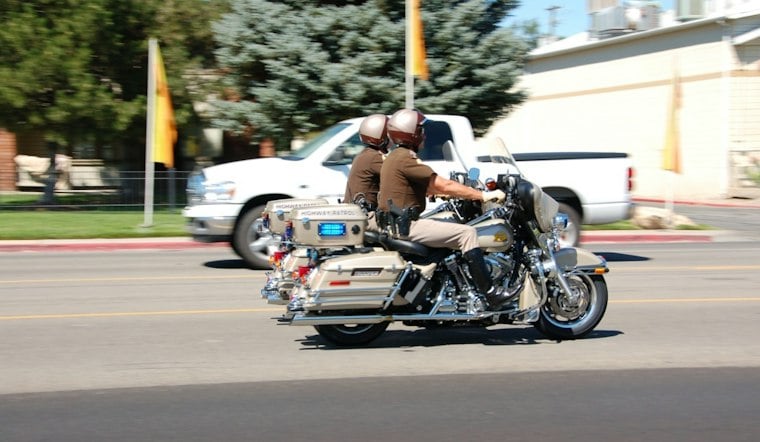
Utah's experiment with letting motorcyclists weave through stopped traffic could become permanent policy, and lawmakers are now talking about letting riders do it on faster roads too. The state's Transportation Interim Committee voted Wednesday to advance a proposal that would remove the law's expiration date and expand where lane filtering is allowed, pushing the maximum speed limit for the practice from 45 mph up to 55 mph.
From Experiment to Permanent Law
Lane filtering lets a motorcyclist move between vehicles stopped in traffic on certain roads and at off-ramps, passing at a slow speed, as KSL.com has reported. Utah first passed the law in 2019 and extended it in 2022, but as written it is set to expire July 1, 2027. The new proposal, detailed by KSL reporter Daniel Woodruff, would strike that sunset date altogether and let riders filter on roads with speed limits as high as 55 mph, up from the current 45 mph ceiling.
Rep. Walt Brooks, who represents St. George, is the lawmaker driving the push to make the law permanent. He said I-15 and I-215 freeways would remain exempt from lane filtering, since the practice cannot be done on freeways under the plan. Brooks told the committee that statewide data showed no statistically significant increase in crashes tied to lane filtering, and that he believes he has seen fewer riders breaking the law simply because a legal option now exists.
Not Everyone Is Convinced
The bill, which is expected to be considered when the legislative session begins in January 2027, would also let motorcyclists install an amber side light to boost visibility and would give courts the option of ordering a rider-education course as a penalty for violations. Sen. Kathleen Riebe, who represents Cottonwood Heights, voted to advance the bill but said she worries that widening the law could lead riders to assume lane filtering is allowed everywhere, not just on approved roads.
Rep. Norm Thurston of Provo and Rep. Ariel DeFay of Kaysville both opposed making the extension permanent, preferring instead to revisit the law every few years rather than lock it in indefinitely. The split reflects a broader tension on the committee between lawmakers who see the data as settled and those who want the option to reconsider as conditions change.
A Record Year for Motorcycle Deaths
The debate is unfolding against the backdrop of what KSL.com describes as Utah's highest motorcycle fatality total on record, with 72 deaths reported last year. KUTV, citing the Utah Highway Patrol, reports that 72 motorcyclists died in 2025, the deadliest year in state history. Utah Highway Patrol has pointed to failure to yield and following too closely as two major factors in fatal motorcycle crashes.
Earlier this year, a Utah Highway Patrol official told KSL.com the agency was neutral on whether the law should keep a sunset provision, since filtering itself had not had much effect on safety one way or the other. The agency instead flagged a different problem: riders filtering onto roads where it is not authorized, or illegally splitting lanes while traffic is still moving — conduct the law does not permit. More than 40% of motorcycle crashes reported by the Highway Patrol were single-vehicle crashes, according to the same report.
Training and licensing gaps also loom large in the safety conversation. More than 75% of motorcyclists who died in Utah crashes last year did not have a motorcycle endorsement, according to KUTV, and fewer than 10% had taken a safety course. KSL.com's earlier reporting cited the same endorsement figure from Utah Highway Patrol.
Those numbers sit alongside a longer rise in motorcycle deaths statewide. The Utah Highway Safety Office has recorded 42 motorcycle fatalities in 2023 and 53 in 2024, while a separate release from the Utah Department of Transportation described the 2024 total as a 15-year high, with deaths concentrated during the summer months of June through August. The committee advanced the bill for lawmakers to take up next year, as debate continues over both infrastructure and rider behavior. Carter Williams contributed reporting to the original KSL article.



