

























































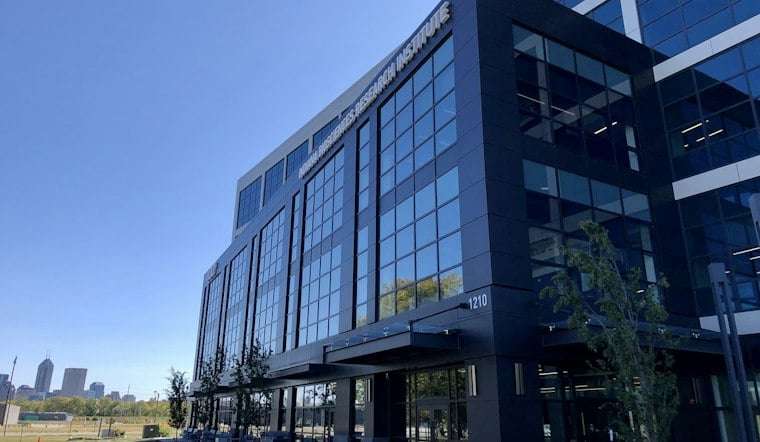
16 Tech Community Corporation has launched a national search for developers to take on the next phase of its 50-acre innovation district just north of downtown Indianapolis, with eight parcels now up for grabs for lab, office, residential, hotel and retail uses. The nonprofit behind the district is asking for qualified partners who can design, finance and build on land that the organization says is largely shovel-ready.
Eight Parcels, One Big Ask
According to Building Indiana Business, 16 Tech Community Corporation announced a national RFQ/P search for development partner services to advance the next phase of its innovation district. The district's own development page describes the opportunity similarly, noting it is seeking qualified development partners across eight available parcels in Indianapolis, with potential uses spanning lab, innovation, office, residential, hotel and retail. The district sits on 50 acres, and its two completed phases of development already represent $350 million in vertical development and $88 million in horizontal infrastructure, per the same report.
A CBRE national life sciences team led a market study of the district's remaining 1.4 million square feet of projected vertical development, the outlet's report notes. Out of that study came two specific concepts: a seven-story building with laboratory, office, mixed-use or innovation space planned immediately east of Innovation Building 1, and a 150,000-square-foot lab-enabled multi-tenant flexible office project. 16 Tech and CBRE also identified a full-service hotel with 150 to 200 rooms planned for a Fall Creek frontage site at the south end of the district.
What's Already There
Innovation Building 1 currently houses the Indiana Biosciences Research Institute, its Future Legends Lab, the Watanabe Conference Center, Indiana University School of Medicine's Center for Diabetes and Metabolic Diseases, and the CEOs of Indiana Corporate Partnership, according to the report. The broader district, which opened in 2021, includes partners such as Indiana University, Purdue University, IU Health and the Indiana Biosciences Research Institute, and the report counts more than 30 biotech and life sciences-related companies among the roughly 350 companies now operating there, with about 1,200 people working on-site and more than 375,000 visitors arriving annually.
Those numbers track with figures 16 Tech itself has reported elsewhere. The CEOs of Indiana Corporate Partnership reported last year that the district had grown to 300 companies, up from 200 the year before, with more than 400 individuals using its coworking and makerspace. 16 Tech's own development pages add further context, describing 630,000 square feet of existing innovation facilities and amenities — including projects under development — with a plan to reach 2.2 million square feet at full buildout, and more than 300 innovation-related entities calling the district home, including the state's tier-one research institutions.
Active Projects And Parcel-Specific Rules
Two projects already underway illustrate the kind of investment 16 Tech is courting: a $172 million research expansion by the Indiana University Launch Accelerator for Biosciences and the headquarters for Heartland BioWorks, both of which the Building Indiana Business report says are expected to be complete in 2027. Heartland BioWorks is described in the report as Indiana's federally designated biomanufacturing tech hub. The district's own materials say 30% of the district is complete or in active development, representing more than $341 million in vertical investment and $90 million in infrastructure.
Not every parcel carries the same requirements. Indiana Avenue-facing parcels require retail-ready ground floors, with grocery, food and beverage, fitness and amenity uses prioritized, per the report. Lab and office spaces must include wet-lab-ready infrastructure and multi-tenant programs that may offer shared equipment, flexible lease suites and collaboration areas, and any development must include physical and programmatic connections to the existing district. Parcel L specifically — near Fall Creek and the planned 16 Tech Bridge — is being considered for a hotel, as 16 Tech's site describes it, designed to attract and connect visitors to downtown's medical and research corridor.
Who 16 Tech Wants, And Why Now
16 Tech is looking for a development partner with a track record of attracting private institutional capital, according to the report, and tenant requirements include collaboration with 16 tech, owner and occupant users, economic development opportunities and creative public-private partnerships. The site benefits from opportunity zone and certified technology park designations, along with local-government tax-increment financing support or eligibility, the report states. Six additional shovel-ready parcels remain available for future investment beyond the ones currently highlighted.
“16 Tech is bringing an exceptionally competitive and compelling development opportunity to the market,” Emily Krueger said, according to Building Indiana Business. Krueger added that the organization has invested in infrastructure, strategic partnerships and community building for almost a decade. CBRE projects that district operations will support 4,577 jobs statewide at full buildout in 2035, contribute $800.9 million annually to Indiana's economy, and generate $49.8 million in annual state and local tax revenue, per the report.
Responses are due December 18, 2027, and must be sent to CBRE executive vice president Peter Jansen and vice president Jeff Merritt, who serve as 16 Tech's real estate and land development advisors, the report notes. Indianapolis-based HRE Advisors is providing a feasibility study and additional support services for the effort.
A Regional Sector On The Rise
The push comes as Central Indiana's life sciences sector continues to expand. The region had 211,375 life sciences workers in 2025 — nearly three times the 70,606 workers in Northeast Indiana — according to the Indiana Business Research Center. Life sciences accounted for 16.5% of Central Indiana's total employment in 2025 and generated $43.1 billion in life sciences GDP, equal to 26.5% of the region's overall GDP, with the sector's real GDP growing 38.6% between 2019 and 2025.
Nationally, the lab real estate market that 16 Tech hopes to tap is showing early signs of stabilizing. CBRE reported that U.S. lab and R&D net absorption turned positive in the third quarter of 2026 at 569,257 square feet, with vacancy falling to 23.4%, even as rent and investment volume declined. 16 Tech has pursued lab development before: in December 2023, NexCore Group announced plans for Waterway Labs, a $60 million life sciences lab building at 1206 Waterway Blvd., with Cushman & Wakefield providing agency leasing services, according to a Cushman & Wakefield announcement. That five-story project was designed to include HATCHlabs and HATCHx space as part of NexCore's HATCHspaces platform, built specifically for startups graduating out of academic labs and incubation environments, with groundbreaking anticipated in 2024.
A separate, earlier report from Inside INdiana Business described 16 Tech's pre-leasing push for a planned 100,000-square-foot laboratory building and a 40,000-square-foot office structure aimed at sports- and health-focused tenants. At the time, no timelines had been set for those buildings' construction, and development costs had not been finalized, though build-to-suit space was expected to cost at least $40 per square foot per year.



