

























































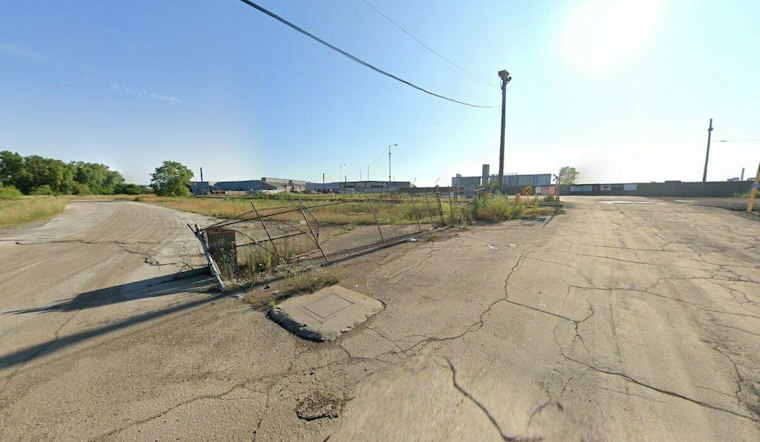
A scrap-metal shredding facility built and ready to open along the Calumet River has lost its latest court battle to actually start operating, after the Illinois Appellate Court, First District upheld Chicago's denial of its permit. The ruling marks another defeat for General III, the company that inherited the long-contested Southeast Side site after years of community pushback.
The appellate court found that Chicago was justified in relying on a health impact assessment when it denied the facility's operating permit, according to the Chicago Sun-Times. That finding closes out, at least for now, a dispute that has dragged through a city administrative hearing, Cook County Circuit Court, and finally the appellate bench. The facility, owned by Reserve Management Group's General III, had already received a state construction permit and was physically built at East 116th Street — fully constructed but never allowed to turn on.
A Permit Fight Years in the Making
The saga traces back to General Iron, which operated for decades in Lincoln Park before proposing to relocate its scrap-shredding operation to the Southeast Side as Southside Recycling. Community, health and environmental advocates pressured then-Mayor Lori Lightfoot to block the move, and her administration ultimately rejected the operating permit over air pollution and public health concerns. A federal civil rights investigation later found that shifting the business from a predominantly white neighborhood into a Latino area surrounded by predominantly Black communities amounted to discrimination, the Sun-Times reports.
General III did not accept the denial quietly. Reserve Management Group argued that the city added its health impact assessment late in the review process and outside the proper scope of the application, and the company asked a city administrative law judge to determine whether it had met permit requirements. That judge sided with General III — a decision that prompted Mayor Brandon Johnson's administration to challenge the ruling in circuit court.
Circuit Court Sided With the City, Then the Appeal
In August 2024, the circuit court ruled that Chicago had acted within its rights to deny the permit, reversing the administrative judge's favorable outcome for General III. The company appealed that decision, arguing the city had failed to follow its own rules, but the Illinois Appellate Court, First District has now upheld the permit denial a second time, closing another chapter in a fight that activists have waged for years outside City Hall.
A health impact assessment cited by the city warned that the facility could add to the community's existing air pollution burden and negatively affect residents' mental health, according to Block Club Chicago. Separately, the Chicago Department of Public Health has pointed to broader concerns about health, environment and quality of life, along with compliance issues identified during that assessment process, as cited on the City of Chicago's page tracking the RMG expansion dispute.
A Neighborhood Already Burdened
The fight over General III has long been tied to broader questions about pollution on the Southeast Side. A 2021 report found that metal levels in the area's air were below the EPA's benchmark, though particulate matter had ticked upward over the prior three years, the same Block Club Chicago reporting notes. That report also described the Southeast Side as more polluted than other parts of the city overall — even while still falling below the EPA's long-term benchmark for concern.
The Southeast Side has been compared with Lincoln Park on health and life expectancy. A more recent federal review, an EPA report dated January 28, 2026, compiled air-monitoring data from two representative sites — George Washington High School and the South Water Filtration Plant.
What happens next for the finished-but-idle facility remains unclear. A spokesman for the business said he could not immediately comment because officials were still reviewing the ruling, while a spokeswoman for Chicago's Law Department did not immediately respond to a request for comment, per the Sun-Times. General III said it would take its case to the Illinois Supreme Court, but whether the Calumet River plant will ever be allowed to open has not been established.





