

























































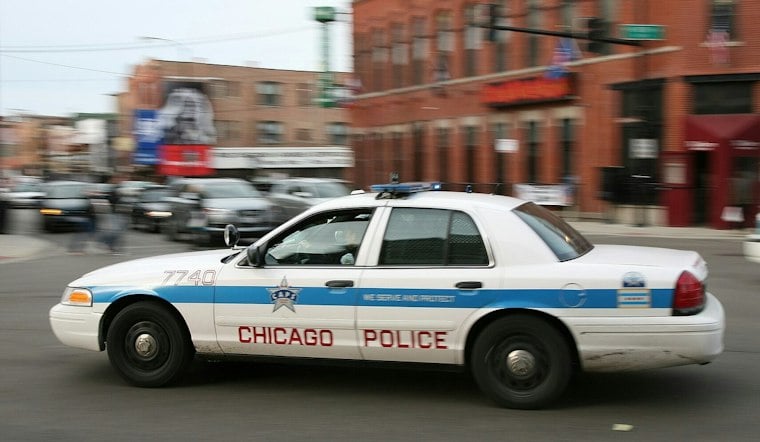
Chicago City Council members recently agreed to pay nearly $261 million to settle claims tied to former Detective Reynaldo Guevara. That agreement has renewed attention to what people in custody can access while police read their rights. The Cook County Public Defender's Office operates a hotline for people seeking legal help.
The figure and settlement discussion come from an Oct. 25 Chicago Tribune opinion piece. The authors say the agreement covers a lawsuit brought by victims of Guevara's abuse. The Cook County consent decree also sets requirements for phones, rights signs and private rooms for attorney visits.
Phone and Lawyer Access
The consent decree sets out specific access requirements: phones and rights signs in every interrogation room, plus private attorney-visitation rooms in every station. These measures provide a way to contact or meet with a lawyer.
The Cook County Public Defender's Office operates the Arrest Hotline for people seeking legal help. The hotline is part of the broader access picture; the consent decree separately sets requirements for phones and private rooms.
That already-required claim lines up with how the MacArthur Justice Center describes a consent decree. The decree requires CPD to install phones and display signs informing people of their rights, with the Public Defender's free 24-hour Arrest Hotline, in every interrogation room. It also requires private, confidential rooms in every Chicago police station, including detective divisions, so people can call or meet with lawyers.
A posted sign still leaves the call to station practice. The authors' no-cost argument is a reading of requirements already described. It is not a room-by-room inspection of whether those phones and rooms are in use.
The Hotline Already on the Sign
The number those signs are supposed to carry is live. The Cook County Public Defender's Arrest Hotline operates 24 hours a day, 365 days a year, at 844-817-4448. The person under arrest can call. Friends or family can call for them. The office says an attorney will come to the police station and provide representation for free.
The Cook County Public Defender's Arrest Hotline operates 24 hours a day, seven days a week.
The hotline offers a route to an attorney at the station, but how often a lawyer arrives before questioning starts is a separate measure.
First Defense Legal Aid runs a separate 24-hour hotline and also provides free representation to arrestees. The nonprofit and the county office are different operations with the same front-end promise, that the first lawyer does not have to be hired from a holding area.
Capacity is the part a decree cannot hang on the wall. On X, @CookCoDefender said the office was grateful that leading public defenders were elevating the fiscal burden of past police misconduct and the case for proactive measures. The same post said staffing and funding disparities with the Cook County State's Attorney's Office are the largest they have been in years, and it referred to a 2027 budget meeting. More completed calls would land on that office.
What Bond Court Respondents Said
One local count of phone access comes from the spring of 2020, and it is a survey, not a station log. From April 16 through June 5, the Cook County Public Defender's Office surveyed 1,468 people in bond court. Twenty-three percent said CPD never offered them access to a phone while they were detained at a police station. The MacArthur Justice Center's account of that survey says those who were allowed a call were forced to wait an average of 4.2 hours.
Those interviews predate the center's Sept. 28, 2022, description of the consent decree's phone, sign, and private-room requirements. They do not describe whether a given district meets those requirements now. They record what a large group of people, already far enough along to be in bond court, said they were offered while detained.
The Tribune authors set a longer research clock beside that wait. They cite findings that roughly 84% of false confessions occur after a person in custody has been interrogated for more than six hours. They also say false confessions appear in around 60% of homicide cases nationally in which DNA evidence later exonerated the convicted person.
A wait for a phone and the length of an interrogation are different measurements. The 84% and 60% figures are research claims the authors are citing, not a new tally of Chicago interviews.
The Payout the Authors Are Writing Against
First Defense Legal Aid points to a 2014 United Nations Office on Drugs and Crime report for the broader claim. Early access to counsel, the report said, can prevent mistreatment, reduce false confessions and the wrongful convictions and costly lawsuits that can result, and reduce arbitrary and excessive pretrial detention.
As of their Oct. 25 piece, City Council members had recently agreed to pay nearly $261 million to settle a lawsuit brought by victims of Guevara's abuse.
The connection they want a reader to make runs from a long interrogation to a false confession to a settlement years later. The local fact they can put a dollar sign on is the Council's agreement. The operational fact they can put a phone number on is 844-817-4448. Chicago pays millions of dollars to resolve police-abuse claims. The nearly $261 million is one agreement to pay, not a projection of the next case.
The Debate Over Access
Access to lawyers for people in CPD custody is a broader issue than the mechanics of a rights-warning procedure.
The policy debate concerns police settlements and how people in CPD custody can reach legal counsel.
The hotline does not wait on that review. Anyone can call 844-817-4448 now, including friends or family trying to get a free lawyer into a station for someone who has not been handed a phone. The consent decree requires phones in interrogation rooms and private rooms in every station.



