

























































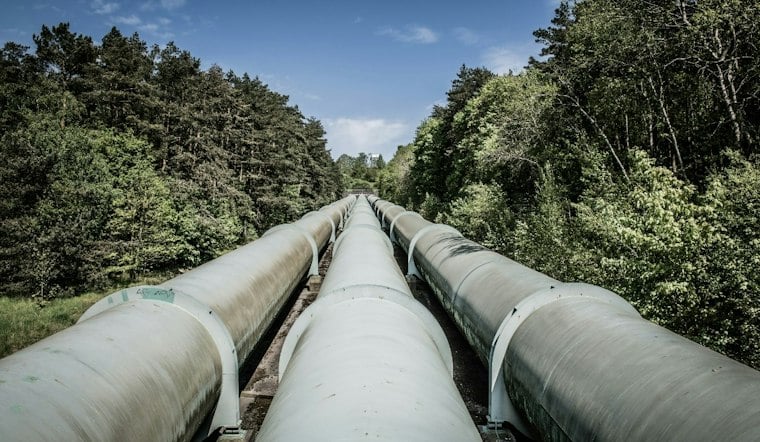
Energy Transfer has given the official go-ahead to a $1.6 billion natural gas pipeline that would snake 215 miles through South Mississippi, locking in plans to feed the region's growing appetite for electricity tied to artificial intelligence data centers, LNG export terminals and power utilities. The project, still pending federal approval, is expected to begin service in 2030.
The company announced it had reached a positive final investment decision on the South Mississippi Pipeline, according to pgjonline.com. As reported by New Orleans CityBusiness, the line would originate at the Perryville natural gas hub in Richland Parish, Louisiana, and run through southern Mississippi before connecting to Florida Gas Transmission northwest of Mobile, Alabama.
Route Still Taking Shape as Capacity Grows
The pipeline's initial design capacity is 1.2 billion cubic feet of gas per day, and the route is expected to cross three Louisiana parishes and as many as 10 Mississippi counties, per the same CityBusiness report. Energy Transfer launched a binding open season for firm shipper commitments, which closes November 25 — just over two weeks from now — and those commitments will help determine the pipeline's final capacity and diameter, the outlet notes. The project's final route has not yet been determined, according to the company's own disclosures.
Energy Transfer expects to own and operate 51% of the pipeline, with shippers holding the remaining 49%, the article states. The company still must file applications for a certificate of public convenience and necessity with the Federal Energy Regulatory Commission, a step that would trigger a review of the proposed route and a public comment period. An Energy Transfer subsidiary plans to seek that FERC authorization to build the project facilities, according to a separate report from pgjonline.com.
AI Data Centers Driving the Demand
Energy Transfer has said the pipeline will give shippers greater access to gas from multiple southeastern U.S. basins, supplying electric utilities, LNG export terminals and AI data center hubs alike. Energy Transfer co-CEO Mackie McCrea said the company has signed contracts since early 2025 with technology companies and electric utilities to supply more than 9.5 trillion British thermal units of natural gas daily — enough, per the company, to power about 32 million average homes. McCrea also said the pipeline would drive other upstream opportunities for Energy Transfer, the report notes.
One contract supporting the project is a long-term deal starting in 2029 for capacity out of the Marcellus-Utica shale formation in Appalachia, the outlet's report adds. An Energy Transfer spokesperson declined to provide additional details on the economic factors driving the pipeline's development, per the same account.
A Regional Surge in Gas-Fired Power
The push comes as federal energy forecasters warn that AI-driven demand could blow past existing projections. Under a high-growth scenario, the U.S. Energy Information Administration projected gas-fired generation would jump 7.3% between 2025 and 2027 — more than quadruple the 1.7% increase in its baseline outlook, according to naturalgasintel.com. Analysts cited in that report estimated data center demand alone could add anywhere from 3 to 20 billion cubic feet per day of additional natural gas consumption by 2030.
South Mississippi isn't the only project riding that wave. Kinder Morgan's proposed Mississippi Crossing pipeline — a separate line connecting Greenville, Mississippi, to Butler, Alabama — has drawn a legal challenge from the Southern Environmental Law Center and Sierra Club, who contend federal regulators approved an unnecessary project based on exaggerated data center electricity forecasts, according to newsfromthestates.com. Reports differ on the scope of that project: CityBusiness describes it as an 11-county, $1.7 billion pipeline, while newsfromthestates.com cites a Kinder Morgan estimate of $5.2 billion to build it, and Mississippi Free Press describes a 208-mile pipeline approved by FERC that spans 10 counties.
Florida Gas Transmission, the system the new South Mississippi line would tie into, is jointly owned by Energy Transfer and Kinder Morgan and connects electric utilities and industrial users across Florida, the CityBusiness report states. The buildout also reflects a broader wave of AI-linked infrastructure investment in the region — Meta's Hyperion AI data center, a $50 billion project, is already under construction in Rayville, Louisiana, according to the same report.





