

























































Indiana Gov. Mike Braun submitted the state's formal bid to host the United States Space Academy on Monday, proposing a package of site-selection help, workforce development services, and possible tuition assistance developed with Indiana University, Purdue University, the University of Notre Dame and Ivy Tech Community College. The bid now heads to the Indiana General Assembly, which must sign off before any of it moves forward.
Braun's office said the proposal was developed with local industry and university and community-college partners, naming Indiana University, Purdue University and the University of Notre Dame as university partners and Ivy Tech Community College as a community-college partner, according to WTHR. The state's offer includes innovation-district revenues and workforce-development services alongside the potential tuition help, all aimed at convincing NASA that Indiana is the right permanent home for the new academy.
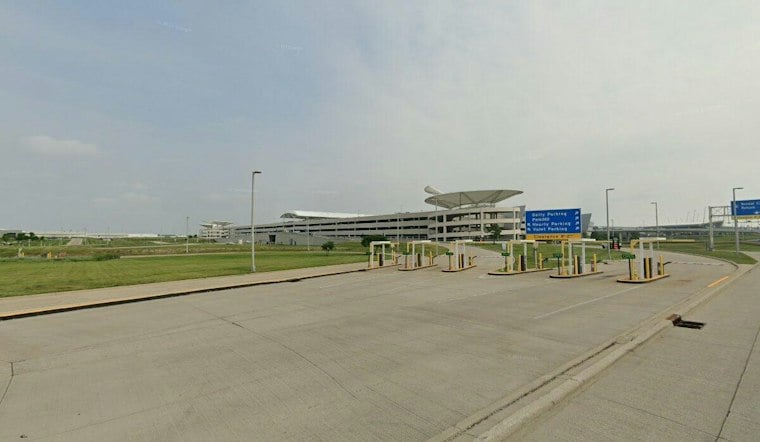
Four possible Indiana locations made it into the bid: Grissom Air Reserve Base, a site near Indianapolis International Airport, the LEAP Innovation & Research District in Lebanon, and the Purdue Research Foundation property in Tippecanoe County. “Indiana is an ideal destination to train tomorrow's space, aviation and defense leaders,” Braun said in a news release carried by the station. His office also pointed to the state's existing work developing and manufacturing defense and national-security technology, including drones, hypersonics and semiconductors, as part of the pitch.
A Crowded Field of Competing State Bids
Indiana isn't working in a vacuum. Back in September, the Indiana Capital Chronicle reported that Alabama, California, Florida, Ohio, Louisiana, Maryland, Mississippi, New Mexico and Texas were all considered possible host states. Since then, the field has only gotten more crowded and more detailed.
Louisiana formally submitted its own proposal to put the academy at LSU New Orleans' lakefront campus, with a plan described by Greater New Orleans, Inc. that would bring a first class of 300 cadets in fall 2028, growing to 1,200 by fall 2031 and reaching 4,000 or more cadets over time. Colorado, meanwhile, is pitching a campus in Colorado Springs that Axios pegs at a projected $8.2 billion in cost, paired with roughly $322 million in proposed state and local incentives. Virginia has also thrown its name in, with Gov. Spanberger backing a bid for a campus of more than 600 acres primarily in Hampton plus a satellite site at the Mid-Atlantic Regional Spaceport, according to the Daily Press. Pennsylvania's bid, covered by the Washington Examiner, would bring roughly 300 cadets to a former college campus in 2028 before a planned move to a 900-acre airport site in fall 2031.
Conflicting Numbers On How Big The Academy Will Get
Exactly how large the academy's enrollment will eventually grow depends on which account you read. The seed reporting cited by WTHR says class size is expected to reach 1,300 cadets by 2031, while the Indiana Capital Chronicle's September report put the figure at 1,200 students by the time a permanent campus is ready that same year. Those two numbers haven't been reconciled in the available reporting.
What is consistent across sources is the broader timeline. Ars Technica reported on NASA's plan calling for a groundbreaking on a permanent campus no later than 2027, with the first class enrolling and beginning studies in temporary facilities in 2028 and a transition to a permanent campus in 2031. The academy, established in August 2026 and backed by NASA, is expected to eventually train at least 4,000 students whose graduates would go on to the Space Force, NASA, or the civilian sector.
What Happens Next For Indiana's Bid
For now, Indiana's proposal sits with state lawmakers. The Indiana General Assembly must approve Braun's bid before the state's offer of site-selection support, innovation-district revenue sharing and workforce programs can move forward, leaving the question of where the academy ultimately lands unresolved while competing states sweeten their own pitches.



