

























































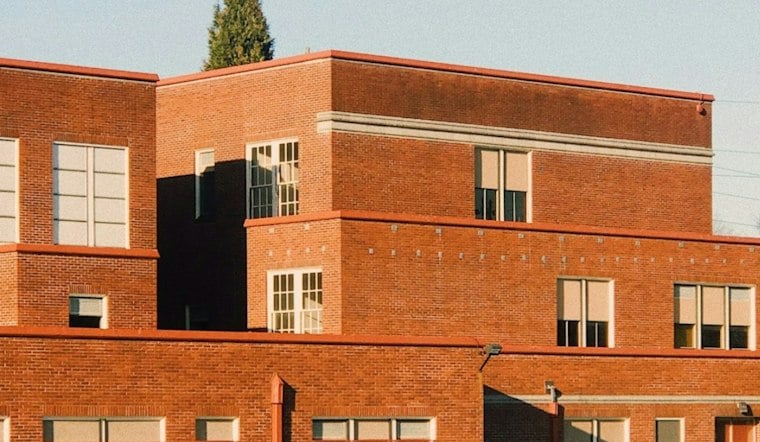
Voters in Mountain Empire Unified School District approved a $23 million bond measure with 58.38% support, clearing a path for the rural San Diego County district to finally address school buildings that Superintendent Patrick Keeley says are quite literally falling apart. Measure L will raise property taxes by $38 per $100,000 of assessed value, and district leaders say it arrives just in time to unlock additional state funding for a long-delayed high school redesign.
The district, tucked in the far southeastern portion of San Diego County, needed the bond to match state grant dollars, and its passage comes after years of uncertainty about when, or whether, funding would ever materialize. As The San Diego Union-Tribune reported, the bond had been uncertain territory for a district that last passed one in 2018, and only by fewer than 20 votes. Without it, officials worried school funding would stall indefinitely.
California requires school bonds to clear 55% approval, so Measure L's 58.38% margin gave the district real breathing room. Keeley called the result exciting and said passage was a great moment for a community that has watched its facilities deteriorate for decades.
Rebar, Sinkholes, and Water That Isn't Safe to Drink
Just two weeks ago, as early returns came in on Measure L, KPBS reported that yes votes were leading in most San Diego County districts, including Mountain Empire, though that count was an early tally and not certified results. The outlet noted multiple schools in the district had failing water systems and that the high school itself had earthquake safety issues. Keeley described the damage bluntly, saying, “We have exposed rebar coming out of the bottom of the foundation at this point.”
The superintendent traces much of the structural trouble to design choices made in the 1970s, when exterior walls were built from concrete studded with rocks that tend to blow off in mountain winds. At Potrero Elementary School in Pine Valley, the station's report and the seed story describe drainage and roof problems, major water intrusion beneath the building, and portable trailers well past their intended lifespan. Keeley has pointed out sinkholes in an unusable kindergarten bathroom at the campus.
Most of the district's schools rely on well water, which requires expensive upkeep, and some campuses have water that is not potable. The district also spends an unusually large share of its budget on transportation, a cost driven by the sheer size of its service area. Because Mountain Empire has little commercial property within its boundaries, its bond fundraising capacity rests almost entirely on residential assessed real estate value.
A Second Chance After a 2024 Bond Failure
This is not the district's first attempt at securing construction money in recent years. According to KPBS, Mountain Empire's previous bond measure failed in 2024. Since then, the district received $4.6 million through the state's financial hardship program to design a new high school campus, and the outlet's reporting indicates that $2.2 million of related state funding went toward the district's elementary schools in 2025.
District bond indebtedness is what allows Mountain Empire to apply for that financial hardship assistance in the first place, which in turn opens the door to more state funding. The California Facilities Hardship Grant can cover 50% of a facility's replacement cost, but it requires a community match, which is exactly the role Measure L's bond dollars are meant to play. The district plans to apply for a full hardship grant now that voters have approved the local match, and it has also begun design work on its elementary schools.
What Gets Built, and When
Keeley said the district has forged a strong relationship with the state's Office of Public School Construction, but cautioned that rural and small districts face a genuinely complex process to navigate, one that requires patience and ongoing conversations with state officials. If funding is secured and apportioned, Mountain Empire expects to start high school construction work around November 2027, with elementary school work following about a year later.
The district may also pursue smaller, faster wins in the meantime, including work on the high school's agriculture building or solar panel installations. Mountain Empire plans to apply for a career and technical education facilities grant that would cover half the cost of the agriculture building, and Keeley said that kind of state support could help stretch the bond's $23 million further than it would go alone.
Not every student currently enrolled will see the benefits firsthand. Keeley acknowledged that not all current high school students will experience the improvements before they graduate, though he said third-, fourth- and fifth-grade students are expected to eventually have the opportunity to attend a new high school facility as construction phases roll out.
Part of a Mixed Year for School Bonds Statewide
Mountain Empire was one of eight K-12 districts in San Diego County that asked voters this November whether to borrow money for school construction and repairs, per KPBS's earlier reporting. Nearby, Santee School District cited $72 million in repair needs while seeking a bond expected to generate $30 million, and the Julian Union High School District asked to borrow $9 million, according to the same outlet.
Statewide, the picture was murkier. CalMatters reported that 86 California school districts placed bonds totaling $12.4 billion on the ballot for repairs and modernization, while EdSource put the figure at 82 districts across 40 counties deciding a combined $12.6 billion. CalMatters also reported that nearly half of the state's school bond measures were failing in preliminary results, with 50 bonds having passed or leading as of late Tuesday in its tally, since bonds need 55% support to pass.
San Diego Unified's bond loomed largest over the county's results, though sources differ on the exact figure: KPBS had reported the district was asking voters for a $3.5 billion bond, while CalMatters reported voters approved a $3.4 billion bond, which it described as the largest in California, with homeowners expected to pay an average of $294 a year. Getting access to state Proposition 2 construction funding requires districts to provide matching funds, CalMatters noted, and much of that statewide repair money is already spoken for, underscoring why local bonds like Mountain Empire's carry outsized weight for small, rural districts with few other options.





