

























































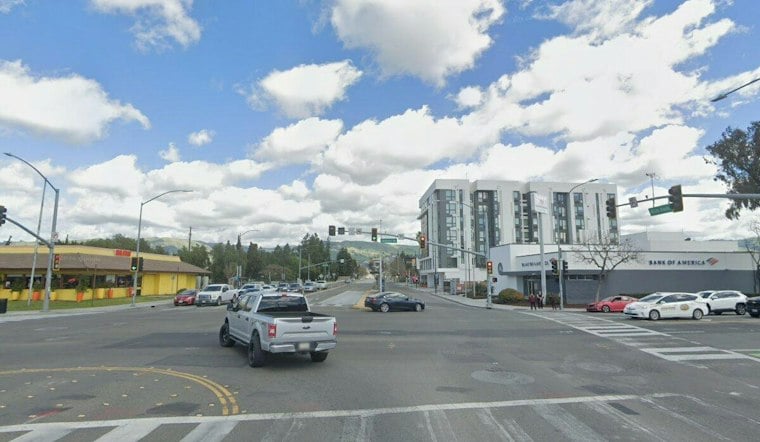
A stretch of Alum Rock Avenue could soon carry an official new identity. San Jose leaders are pushing to recognize roughly a mile of the corridor as the La Avenida Cultural District, a move meant to spotlight East San Jose's Latino heritage, longtime small businesses and local artists.
The city's Rules and Open Government Committee unanimously advanced a memo on Wednesday directing staff to prepare a formal resolution for the full City Council to consider at a later date, according to San José Spotlight. The memo was co-authored by Councilmember Peter Ortiz along with Mayor Matt Mahan and Councilmembers Pamela Campos, Anthony Tordillos and Domingo Candelas, and it directs the city manager to work with the city attorney to draft that resolution. Beyond the paperwork, the memo calls for city staff to promote the district, support local businesses and artists, and pursue state recognition and grant opportunities.
Exactly where La Avenida begins and ends depends on which account you read. San José Spotlight describes the district running along Alum Rock Avenue from McCreery Avenue to 28th Street, cutting through parts of Mayfair and Little Portugal, while CBS News has reported the designated district stretching from 28th Street to Sunset Avenue. Either way, the corridor sits next to Mexican Heritage Plaza. CBS News reports that La Avenida aims to create a cultural and economic hub along Alum Rock Avenue.
A Push Years in the Making
The effort traces back to Chris Esparza, who previously served as community development director at Mexican Heritage Plaza and championed creating an Alum Rock Avenue cultural district to preserve heritage while supporting local artists and small businesses. Ortiz said the current push carries forward Esparza's vision, according to the committee discussion Wednesday. He also said longtime residents, artists and small businesses should be part of East San Jose's future, and that the district's culture deserves investment as well as recognition.
La Avenida is part of the city's broader East San Jose revitalization plan, which aims to bring investment and economic opportunities to the neighborhood. San Jose has already invested in La Placita and the Alum Rock Avenue entertainment zone as part of that wider push, according to the same San José Spotlight report.
What the District Could Mean for Mexican Heritage Plaza
Jessica Paz-Cedillos, executive director of the School of Arts and Culture at Mexican Heritage Plaza and a San José Spotlight columnist, said the district could help preserve cultures, traditions and identities while turning East San Jose into a cultural destination. She added that it could attract economic investment benefiting families, local businesses and cultural institutions like the plaza itself.
Mexican Heritage Plaza describes La Avenida as a multi-phased project designed to revitalize the Alum Rock Avenue corridor in the Mayfair region, per the Mexican Heritage Plaza. But Paz-Cedillos has also said the project still needs funding to be fully established, according to San Jose Inside. That same report noted a recent $100,000 investment was allocated toward building a gateway structure for La Avenida at Mexican Heritage Plaza.
Voices From the Corridor
Pedro Perez, owner of JP Paving and a community engagement partner with Mexican Heritage Plaza, described the corridor as home to popular Mexican street vendors serving mariscos, tacos, burritos and tortas. He said the district would let residents and businesses share what makes the corridor unique, adding that it welcomes everyone to share culture, art and business, according to the committee meeting covered by San José Spotlight.
How State Cultural District Status Works
If San Jose does pursue state recognition, it would be entering a program with specific rules. The California Cultural Districts initiative defines a cultural district as a well-defined geographic area with a high concentration of cultural resources and activities, and designated districts receive an initial five-year designation with the possibility of recertification, according to the California Cultural Districts program. The initiative traces back to Assembly Bill 189, adopted in 2015 and authored by then-Assemblyman Richard Bloom.
Ten new districts are set to join the original statewide cohort in 2026, according to the program. Separately, the California Arts Council's 2025 Cultural Districts grant cycle offered grants up to $10,000 over a two-year period alongside official state certification, technical assistance and joint marketing and branding resources, per an announcement from the California Arts Council.
For now, San Jose's push remains at the memo stage, with the Rules and Open Government Committee's unanimous vote sending the matter toward a future City Council resolution rather than a finished designation. Whether La Avenida ultimately secures state Cultural District status, and how its boundaries are finally drawn, will depend on steps still ahead for city staff and council members.





