

























































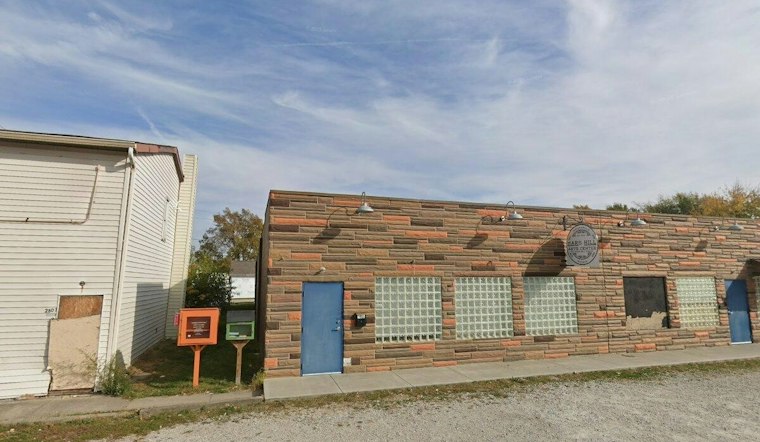
A west side Indianapolis building that once housed an arts center is being transformed into a hub for people rebuilding their lives after prison. John and Lisa Schmitz, who founded the Mars Hill Art Center about 12 years ago, are donating the building to another nonprofit so it can become the Wings of Hope Community Center, according to Schmitz.
The donation, reported by WIBC 93.1 FM, will turn the space into a home base for prison ministry and re-entry work. Schmitz is working with Ken Johnson, a former Colts chaplain, on the ministry side of the effort, which reaches people while they are still incarcerated, while the re-entry piece begins once someone is released. The Wings of Hope Community Center sits at 2811 Mars Hill St., the same address where the Schmitzes bought a long-vacant building at a foreclosure auction back in 2015, according to the IndyStar, which covered the building's earlier transformation into the Mars Hill Arts Center ahead of its grand opening.
Jobs and Wraparound Services for People Coming Home
Schmitz said the program is designed to do more than offer a soft landing. Per the station's report, he described the approach bluntly: we are going to identify who these folks are that are going to fit into our program, we have all the wraparound things, we have jobs. He also said the effort isn't starting from scratch, but is scaling up something that already exists on a smaller scale.
As evidence it can work, Schmitz pointed to a man who served time in five institutions and is now a union carpenter leading his own crew. Schmitz said he's seen this kind of turnaround before, having hired people with felony records while running his own masonry business. Still, the same account notes he was clear-eyed about limits, warning that people trying to game the system will not get far.
Backing From State Officials and the Corrections Department
Schmitz said the effort has drawn support from Gov. Mike Braun and Sen. Jim Banks, and that the Indiana Department of Correction has opened doors for the program, according to the same report. Those claims of backing come from Schmitz himself, with no independent confirmation cited from the officials or the department.
The need is substantial by any measure. More than 90 percent of incarcerated people are eventually released back into their communities, according to an Indiana Criminal Justice Data Snapshot, and in Indiana, 70 percent of the collateral consequences tied to convictions are employment related — with 64 percent of those consequences potentially lasting indefinitely. The same snapshot found that 37 percent of people who exited Indiana prisons in 2021 were reincarcerated within three years.
How Wings of Hope Fits Into a Wider Re-Entry Landscape
Indiana already runs state-level efforts aimed at closing that employment gap. About 80 percent of Indiana residents on parole have found jobs, Indiana Parole Division Director Doug Huyvaert has said, according to the National Reentry Resource Center, even as 100 to 150 people, roughly 2 percent of the state's 6,000 parolees, have their parole revoked in an average month. The state's Hoosier Initiative for Re-Entry program helped more than 1,000 ex-offenders find jobs last year, and parole officers routinely refer people to services covering substance abuse, mental health and employment.
Other organizations have carved out their own niches locally. The Marion County Reentry Coalition keeps a running list of Indianapolis job openings for people with criminal backgrounds, including notes on pay, education requirements and bus-line access, according to Mirror Indy. RecycleForce, meanwhile, will hire people regardless of what's on their record, though workers must enroll before they're released. The guide's broader advice to people leaving prison is simple: take any job you can get, then a better job, then ultimately a career.
Elsewhere, programs have tried different models for the housing piece of re-entry. The Village of Hope Transitional Housing Program, described as the first tiny-home housing program in the country for formerly incarcerated people, places residents in individual units within a neighborhood-like setting, pairing them with case management and service referrals for up to six months, according to research published in Taylor & Francis Online. It's a different approach than what Wings of Hope is planning, but it underscores how much variation exists in programs trying to solve the same post-release problems.
Volunteers Can Sign Up for Training This Weekend
Wings of Hope is also building out a volunteer base, welcoming helpers including high school and college students who need service hours. Volunteers can serve at 13 facilities and typically commit to about once a month. A volunteer training was planned for Saturday, Nov. 7, from 10 a.m. to noon at the center on Mars Hill Street, though whether that session took place as scheduled has not been independently confirmed.





