

























































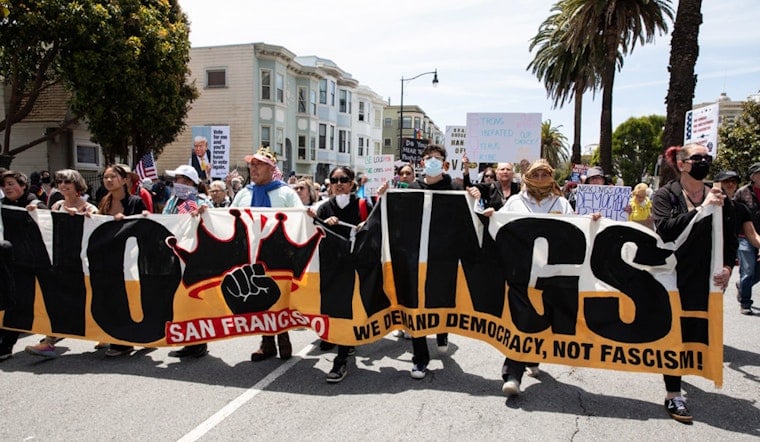
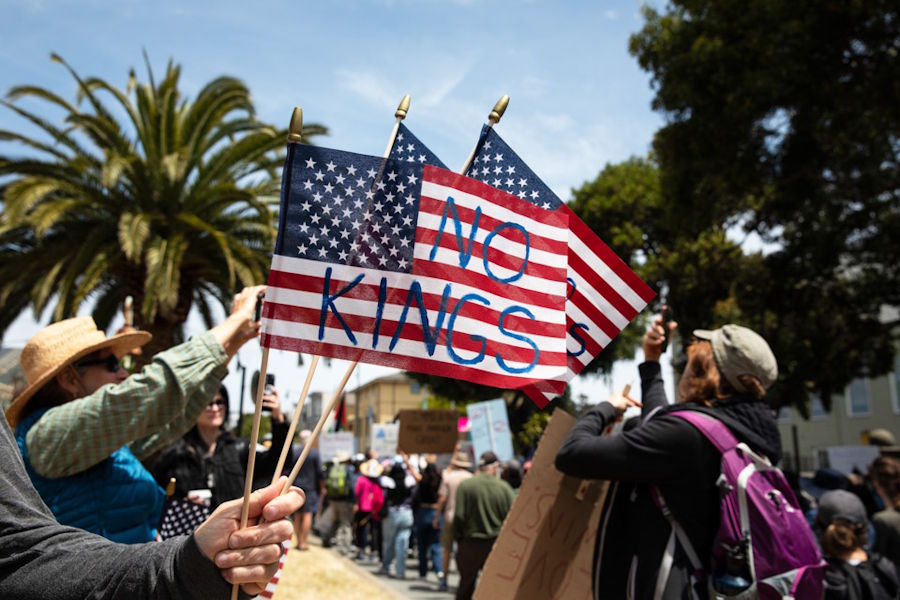
The Bay Area is bracing for another wave of "No Kings" protests this Saturday as thousands prepare to take to the streets in what organizers promise will be one of the largest demonstrations on the West Coast—with San Francisco declared the official West Coast Anchor City for the nationwide movement.
The protests come four months after the June demonstrations that saw tens of thousands march through San Francisco and drew an estimated five million participants nationwide, marking one of the largest single-day protests in U.S. history. This time, however, demonstrators will be marching against the backdrop of a federal government shutdown that's entering its third week, with no resolution in sight.
A Region-Wide Mobilization
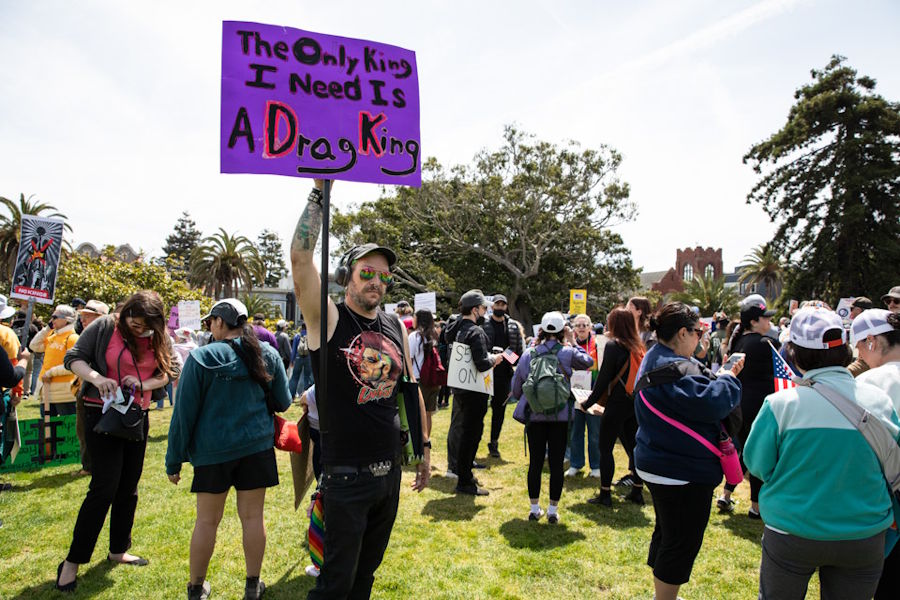
San Francisco protesters will gather at Sue Bierman Park adjacent to Embarcadero Plaza at 1:30 p.m. before marching down Market Street to Civic Center Plaza for a rally scheduled to run until 4:30 p.m., according to SFMTA. A separate demonstration at Ocean Beach will see participants forming a human banner spelling "NO KINGS! YES ON 50"—a reference to Proposition 50, the ballot measure aimed at redrawing California's congressional districts.
Oakland's march, co-sponsored by East Bay DSA and unions including SEIU 1021, will kick off at noon from Wilma Chan Park before proceeding to the Lake Merritt Amphitheater, as detailed by East Bay DSA. In Berkeley, protesters will stage a banner display on the University Avenue Bridge at 1 p.m., with additional demonstrations planned at Telegraph and Bancroft and near Aquatic Park.
The sprawl of planned protests extends far beyond the urban core. According to KTVU, demonstrations are scheduled in at least two dozen Bay Area communities, from Mill Valley to Milpitas, Alameda to Antioch, and along an eight-mile stretch of El Camino Real from Sunnyvale to Palo Alto.
Shutdown Politics and Protest Timing
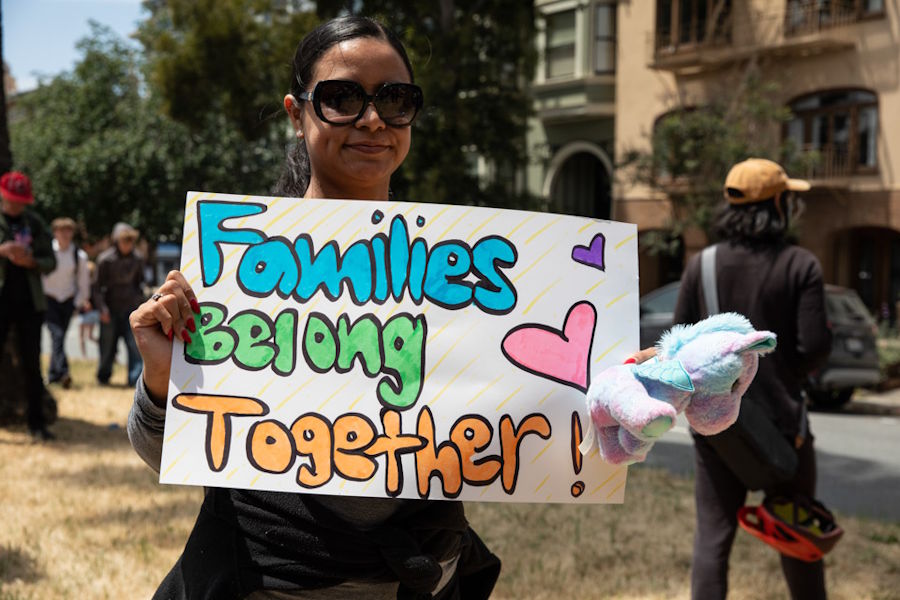
The timing of these protests couldn't be more charged. The federal government shutdown, which began October 1, has already resulted in roughly 4,100 federal workers being laid off across seven agencies, with the Trump administration threatening more cuts, according to CNN. The impasse centers on Democratic demands to extend Affordable Care Act subsidies and Republican insistence on reopening the government first before any negotiations.
"Millions of people across the country are all going to be out saying, united, with one voice, that we don't want kings in America," Indivisible East Bay Organizer Joey Raff told the San Francisco Chronicle. The protests are being framed as a response to what organizers describe as the Trump administration's "authoritarian actions," including immigration crackdowns, military deployments to American cities, and efforts to quell free speech.
House Speaker Mike Johnson has already attempted to paint the demonstrations in a negative light, referring to them as a "Hate America Rally" during recent government shutdown negotiations, as reported by SFist. The rhetorical escalation suggests the administration views these protests as a significant political threat.
Security Preparations and Traffic Impacts
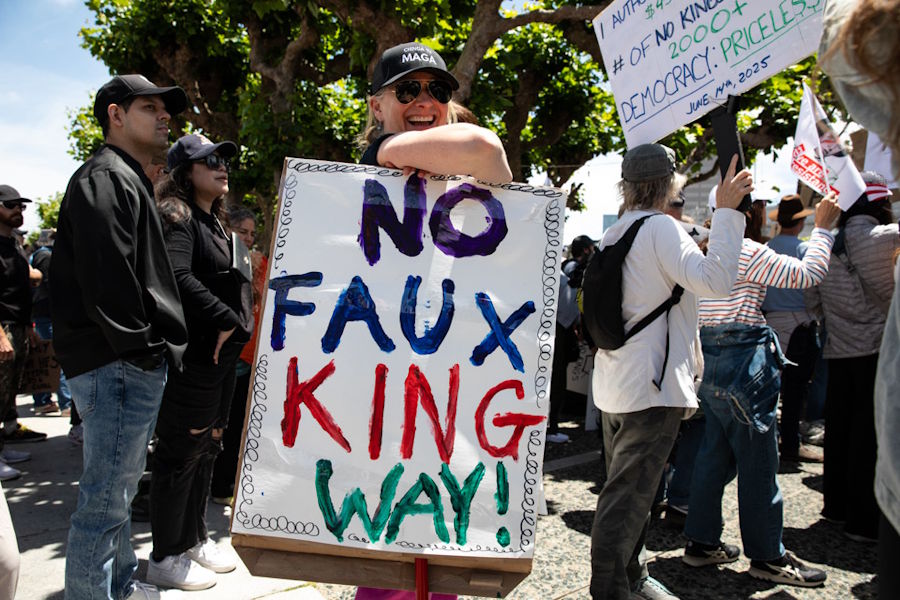
Law enforcement agencies are preparing for significant disruptions. San Francisco police spokesperson Evan Sernoffsky told the Chronicle that the department would be "fully staffed" on Saturday, adding, "We don't expect any disruptions to overall public safety in our city." The SFMTA has already announced that Muni service along Market Street will be rerouted onto Mission Street from 2 to 3:30 p.m., with multiple street closures planned for event staging.
The security preparations come with good reason. While the Bay Area's June protests were largely peaceful, nationwide demonstrations saw isolated incidents of violence, including a fatal shooting in Salt Lake City and a vehicle-ramming incident in Virginia, according to Deseret News.
The heightened security debate also comes as Salesforce CEO Marc Benioff’s call for the National Guard in San Francisco drew sharp backlash from city officials. He later walked back the comment, according to SFist, amid growing criticism that such rhetoric fuels tension ahead of major public events. Meanwhile, SFist also reports that San Francisco is actually on track for one of its lowest homicide rates in decades, even as national political figures continue to paint the city as unsafe.
Building on June's Historic Turnout
The June 14 protests set a high bar for participation. Research by the Crowd Counting Consortium estimated between 2 and 4.8 million participants across more than 2,150 actions nationwide, making it comparable to the 2017 Women's March in scale but spread across three times as many locations.
In the Bay Area alone, June's protests drew more than 140,000 participants, with close to 50,000 in San Francisco and over 10,000 each in Oakland and Berkeley, as detailed by Wikipedia. The demonstrations coincided with President Trump's 79th birthday and a controversial military parade in Washington, D.C.
National Nurses United president Cathy Kennedy, whose union is co-organizing Saturday's San Francisco march, framed the stakes in stark terms. "I've been through my share of fights as a registered nurse for more than four decades, but the state of U.S. democracy has never been in such peril," she said in a statement from National Nurses United.
A Movement's Evolution
The No Kings protests have evolved from their origins as a response to Trump's military parade into something broader—a sustained movement against what participants see as democratic backsliding. The 50501 Movement, named for its goal of organizing 50 protests in 50 states as one movement, has maintained momentum through multiple rounds of demonstrations throughout 2025.
This persistence hasn't gone unnoticed. New York's June protests drew an estimated 75,000 participants, while cities from Knoxville to Las Vegas saw thousands take to the streets. Even smaller communities like Salt Lake City, which canceled its October march after June's fatal shooting, have maintained organizing efforts.
The movement has also maintained strict adherence to nonviolent principles, with organizers implementing de-escalation training and safety protocols. All No Kings events follow a shared commitment to peaceful protest and community safety, with organizers working closely with local partners to ensure orderly demonstrations, according to protest coordinators.
Legal Implications
The protests carry heightened legal significance given the ongoing government shutdown and recent federal actions. A federal judge this week temporarily halted the Trump administration's efforts to lay off federal workers during the shutdown, calling the move unlawful. Meanwhile, the administration has threatened to use the Insurrection Act to deploy federal troops to cities, though President Trump told reporters aboard Air Force One that he doesn't "have to go there yet" because he believes he's winning court cases.
The convergence of the shutdown, mass layoffs, and nationwide protests creates a volatile political moment. With the Senate having failed to advance GOP funding bills ten times as of Thursday, and both parties dug into their positions over healthcare subsidies, Saturday's protests could either increase pressure for a resolution or further harden the standoff.
As the Bay Area prepares for what could be another historic day of protest, the question isn't just about turnout—it's about whether sustained street demonstrations can shift the political dynamics of a deeply divided moment. With organizers promising this will be "only getting bigger and stronger," Saturday's protests may reveal whether the No Kings movement has the staying power to influence policy, or if it will remain a powerful but ultimately symbolic expression of dissent.



