

























































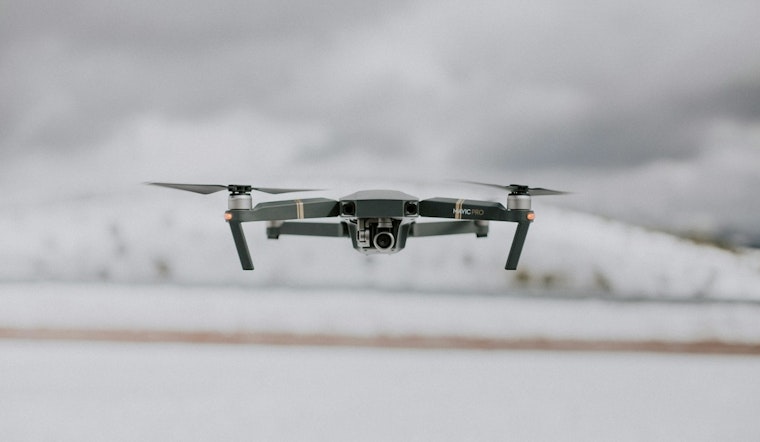
The Federal Aviation Administration has put in place extensive drone restrictions across the Chicago area as the U.S. Department of Homeland Security intensifies immigration arrests. An FAA spokesperson confirmed that the 12-day prohibition on private drones, effective immediately, was at Homeland Security's request, according to a statement obtained by the Chicago Sun-Times. Cited for "special security reasons," the no-fly zone extends 15 nautical miles from downtown Chicago and includes areas as far north as Winnetka and as far south as Dolton.
Amid the clampdown, U.S. Customs and Border Protection has pitched in, claiming the restrictions are to counteract a "credible threat" against law enforcement. "The Trump administration will utilize every tool to keep our law enforcement safe," said the agency in a statement reported by the Chicago Sun-Times. This latest development follows on the heels of the U.S. Border Patrol's dramatic Sky-high entry onto a South Shore apartment rooftop, resulting in over 30 arrests, as was covered by NewsNation and later told by residents to the Sun-Times.
The American Civil Liberties Union of Illinois has criticized the move, perceiving it as an attempt by the Trump administration to obstruct the public and media's ability to oversee federal immigration enforcement. In a sharp rebuke, ACLU's Edwin Yohnka expressed concern to the Chicago Sun-Times: "This broad limitation over such a giant swath of the Chicagoland area suggests that ICE intends (as we recently saw) to use their own drones and helicopters for immigration enforcement action." He emphasized that "Using these military tactics without appropriate oversight and accountability is dangerous."
On the ground, new constraints also greet the west suburban Broadview ICE detention center. Illinois State Police have mapped out a protest zone, amidst the installation of concrete barriers strategically placed to prevent clashes. Broadview police had called for the barriers, ISP pointed out. These measures accompany a trio of open criminal investigations into allegedly aggressive ICE agent behaviors, highlighted by instances such as pedestrians being struck by vehicles and a journalist coming under a pepper ball attack, as reported by CBS Chicago.
The abrupt handing down of airspace restrictions comes without the usual forewarnings, leaving drone operators and businesses scrambling. Commercial drone users, according to Drone Media Chicago's Troy Walsh, who spoke to the Sun-Times, typically receive notifications well in advance to plan their activities. This time, they were caught unawares, a predicament underscored by the concurrent government shutdown that dampens hopes for quick waivers. "Hopefully those leaves hang on longer than they usually do," lamented Walsh to the Sun-Times, hinting at the seasonal business losses they now face under this unforeseen directive. The drone community and those watching over civil liberties remain, thus stiffened against a backdrop of escalating enforcement and surveillance tactics.





