

























































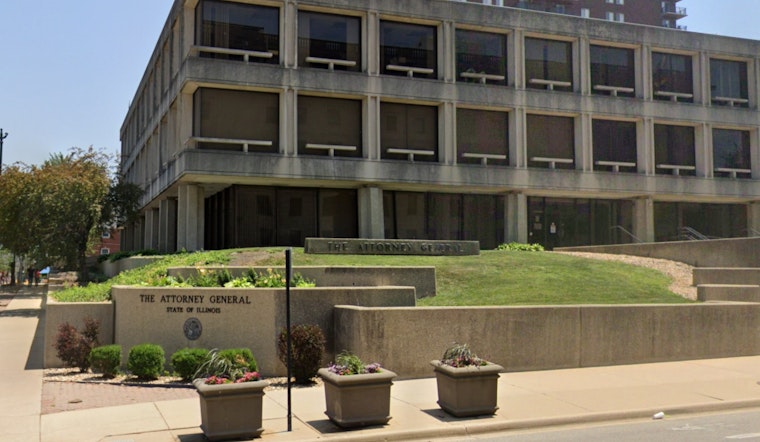
In an assertive move aimed at protecting support services for crime victims, Illinois Attorney General Kwame Raoul has spearheaded a lawsuit against the U.S. Department of Justice (DOJ). Supported by a contingent of 21 other states’ attorneys general, the legal action stands as a bold rejection of new DOJ restrictions that could potentially strip vital funding from domestic violence and violent crime survivors. The lawsuit was filed in the U.S. District Court in the District of Rhode Island, challenging a rule that prohibits the use of federal funds to aid undocumented immigrants in need of support services.
These restrictions apply to the Victims of Crime Act (VOCA), Byrne Justice Assistance Grants (Byrne JAG), and Violence Against Women Act (VAWA) grant funds. Despite the longstanding availability of these programs to individuals regardless of immigration status, the DOJ has instituted a "Legal Services Condition" on these grants. Having endured the trauma of violence, many undocumented survivors now face a new hurdle — a policy that may force service providers to screen for immigration status before extending a helping hand. Raoul emphasized, "I will continue working to protect federal funding for programs survivors of violent crimes rely upon to help them recover from the physical and emotional trauma they have endured," in a quote obtained by the Illinois Attorney General's Office.
This consortium of attorneys general contends that the DOJ’s new policy not only violates the Constitution’s Spending Clause through retroactive and ambiguous conditions attached to previously awarded grants but also disrespects the Administrative Procedure Act. Failure to justify its policy reversal and disregard for the adverse impacts on survivors and service providers sits at the crux of their legal claim. In some states, Byrne JAG grants also buttress criminal justice initiatives, including the provision of support for public defenders. If left unchecked, the impact of these new restrictions could ripple through communities, potentially cutting off critical resources for those in dire straits.
The “Legal Services Condition” is particularly contentious due to its retroactivity and application to both future and already allocated funds. Set to take effect on October 31, this condition threatens to discontinue the use of VOCA, VAWA, or Byrne JAG funds to aid undocumented immigrants in receiving legal services. Should the enforcement of status checks become mandatory, advocacy groups fear the denial of protection for families in crisis. According to the legal argument posited by the states involved, such a mandate could silence survivors and erode trust in law enforcement. Moreover, many service providers do not possess the necessary resources to implement screening processes. Illinois uses its VOCA funds to offer an array of legal services, such as victims’ rights enforcement and civil legal services, without factoring in immigration status, an approach mirrored by VAWA funds' support for legal advocacy.
Joining the united front led by Attorneys General Raoul, Letitia James from New York, Phil Weiser of Colorado, and Rhode Island's Peter Neronha, are the attorneys general of Arizona, California, Connecticut, Delaware, the District of Columbia, Maine, Maryland, Massachusetts, Michigan, Minnesota, Nevada, New Jersey, New Mexico, Oregon, Rhode Island, Vermont, Washington, and Wisconsin. They collectively voice a warning of the new restrictions' potential to destabilize victim services programs and the consequent deterrence for survivors seeking help. In an era where domestic violence and violent crimes already set a daunting challenge for the affected, the DOJ’s new rule stands as a possible impediment to recovery and justice for some of society’s most vulnerable.





