

























































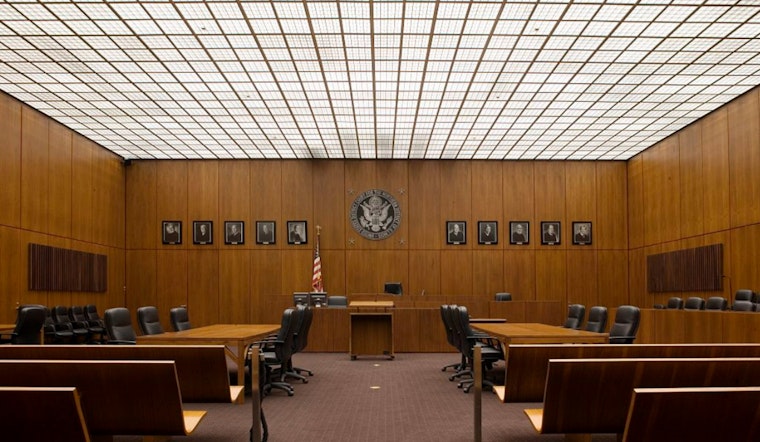
Jury selection got underway on Monday in a closely watched federal civil-rights trial over a 2020 shooting at the Grand Red Line CTA station. Jurors will be asked to scrutinize crowded-platform cellphone clips and surveillance video from the River North stop as they decide whether Chicago police officers used excessive force. The proceedings are taking place at the Dirksen Federal Building and are expected to last about two weeks.
At the center of the case is Ariel Roman, who was shot during a confrontation with Chicago police on Feb. 28, 2020, and later sued the city along with the officers involved. Roman was taken to the hospital and has said his injuries required multiple surgeries, and the criminal charges that had been filed against him were later dropped, CBS Chicago reported.
Video recorded by bystanders and CTA cameras shows officers wrestling with Roman on the platform before shots were fired. In one bystander clip, Officer Bernard Butler can be heard shouting "shoot him" moments before former Officer Melvina Bogard opens fire, according to the Chicago Sun-Times. Bogard was acquitted in a 2022 bench trial, although prosecutors and members of the public sharply criticized the shooting, and attorneys for Roman say both the footage and his injuries will be central pieces of evidence in the civil case.
What investigators found
The Civilian Office of Police Accountability concluded the shooting violated department policy and recommended that both officers be fired, citing repeated Taser use, multiple deployments of pepper spray, and two gunshots on a crowded platform, WTTW reported. COPA faulted the officers for failing to ensure a clear line of fire and said the encounter was escalated in ways that were not necessary. Those findings do not themselves decide civil or criminal liability, but they are expected to figure prominently in witness testimony and expert analysis.
Trial logistics and stakes
Jury selection began at 9 a.m. Monday at the Everett Dirksen U.S. Courthouse, and court staff and attorneys anticipate the trial will run for roughly two weeks, according to FOX 32 Chicago. Public-records materials provided to Roman's attorneys show the city had already spent approximately $1.15 million defending the case through late August. If jurors decide the officers violated Roman's civil rights, Chicago could be on the hook for substantial damages and face renewed scrutiny of police training and oversight practices.
What to expect at trial
Attorneys on both sides say jurors will spend significant time watching the cellphone and surveillance footage that fueled public debate when clips of the shooting began circulating, and when the Civilian Office of Police Accountability released versions of that video last year, CBS Chicago reported. Roman's lawyers are expected to call medical experts to walk jurors through his surgeries and alleged long-term injuries, while the defense has argued that the officer fired in self-defense after a violent struggle on the platform. The case will turn largely on how jurors interpret the recordings, testimony about what officers perceived as a threat, and the federal legal standards that govern when police can use force.
Legal implications
The lawsuit is proceeding as a federal civil-rights case under 42 U.S.C. A7 1983, a statute that allows individuals to sue state actors over alleged constitutional violations and to seek monetary relief, according to Cornell Law School's LII. A verdict in Roman's favor could bring a sizable payout and increase pressure on city officials to address police training and oversight, although his legal team must still meet the federal burden of proof. Legal doctrines such as qualified immunity and municipal-liability rules will shape what remedies are available and whether individual officers face any personal exposure.
Jury selection is unfolding this week, and testimony could begin later in the month. Reporters will be watching closely for witness accounts, any body-camera footage that comes into play, and expert testimony that might help resolve questions the public has been arguing over for years. We will continue to track the trial and report on key rulings and testimony as they come in.





