

























































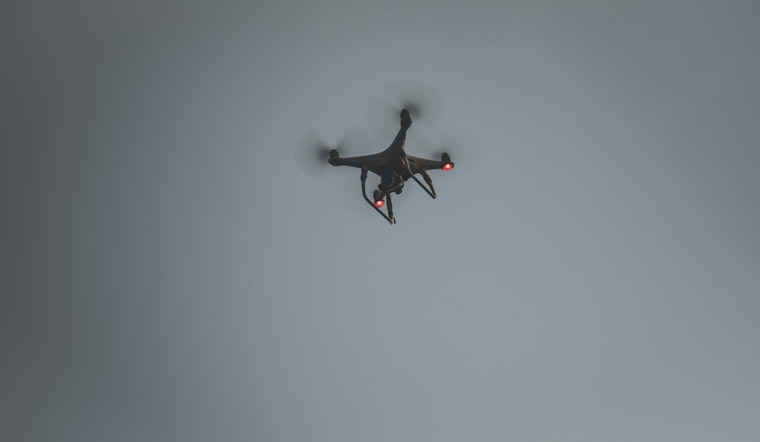
Indiana is trying to turn its skies into a jobs engine, positioning itself as a national proving ground for next-generation drones after being named a federal UAS test site, according to U.S. Sen. Todd Young. Manufacturers have already started calling state leaders and university partners about prototyping and refining systems inside Indiana's newly designated corridor, and officials expect the testing area to cut through Camp Atterbury in south-central Indiana. Young is also tying the moment to the state's biopharmaceutical and biomanufacturing strengths, arguing that the dual focus could bring new, higher-paying jobs to Hoosiers.
Young told Inside Indiana Business that companies "are very interested in Indiana now" because the state test bed lets developers iteratively test different designs, as reported by WIBC 93.1 FM. He said the direct outreach from manufacturers reflects the mix of restricted airspace and research partners Indiana can put on the table. State leaders say the next trick is turning that testing buzz into supply-chain investment and real factory jobs, not just flashy demonstration flights.
Federal nod opens a regulatory runway
The Federal Aviation Administration added Indiana as one of two new Unmanned Aircraft System test sites in January, expanding the program to nine locations nationwide and creating formal lanes for beyond-visual-line-of-sight testing and data collection, according to WFYI. The federal recognition is designed to give companies a predictable environment to test flight rules, safety systems and operational concepts under U.S. oversight instead of relying on ad hoc waivers and workarounds.
Camp Atterbury and the defense corridor
Officials expect it will take roughly six months to lock in the site boundaries and say the corridor will likely stretch from Purdue University down through southern Indiana, linking up military and research assets that offer restricted airspace and realistic operational environments. State coverage has highlighted Camp Atterbury, the Muscatatuck Urban Training Center and Naval Surface Warfare Center Crane as key partners, and noted a prior demonstration at Camp Atterbury that reportedly neutralized a 49-drone swarm, a capability backers pointed to in bolstering the bid, per Indiana Capital Chronicle.
Jobs, training and the state task force
Trying to make sure the designation leads to paychecks and not just press releases, Gov. Mike Braun created the Indiana Initiative for Drone Dominance Task Force to coordinate work among government, academia and industry and to deliver a strategic plan by July, according to a press release from Sen. Young's office. The task force lists priorities such as a cross-sector aerial test corridor, expanded workforce and college training pathways, strengthening the domestic drone supply chain and exploring detection and neutralization infrastructure, according to Sen. Young's office. The hope is that those efforts steer testing interest into commercial production and long-term careers for Hoosiers.
What this could mean for Hoosiers
Young has also been quick to remind audiences that Indiana is "best in class" for biopharmaceutical production and argues that "bioindustrial expertise and biomanufacturing" are critical for national security, another potential route for attracting manufacturing work to the state, as reported by WIBC 93.1 FM. State officials say the real challenge now is converting the test-site win into actual factories, training pipelines and stable local employment.
For now, companies and investors are watching as the task force and federal partners finalize corridors and testing rules. State leaders say the next six months will go a long way in deciding whether early interest turns into concrete jobs and contracts. Hoosiers can expect a steady stream of announcements on training programs, procurement opportunities and manufacturing partnerships as Indiana tries to cash in on the new designation.



