

























































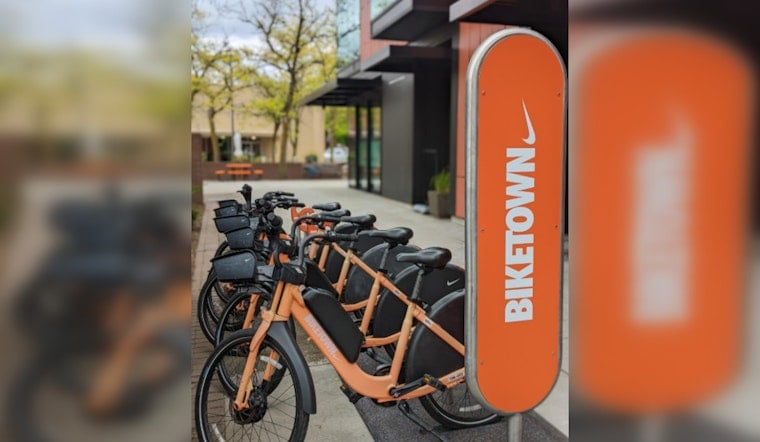
Three new BIKETOWN stations have gone in along SE Milwaukie Avenue in the Sellwood-Moreland neighborhood, giving riders fresh spots to grab an e-bike right in the heart of the district's shops, restaurants, and antique stores. The announcement came Friday from BIKETOWNpdx, with the Portland Bureau of Transportation amplifying the news to its followers.
According to the Portland Bureau of Transportation, the stations are positioned as a starting point for exploring the neighborhood's shops and restaurants, as well as for launching rides down the Springwater Corridor. That trail is a 21-mile paved route running from downtown Portland along the Willamette River through Sellwood-Moreland out to Boring, Oregon, according to TrailLink, making the new stations a natural launch point for anyone chasing a longer ride beyond the neighborhood itself.
SE Milwaukie Avenue is more than a convenient location — it's the commercial spine of Sellwood-Moreland, lined with retail, dining, and antique shops and served by TriMet bus Line 70, per Grokipedia. That mix of foot traffic and transit connections makes the corridor a logical place for PBOT to plant new bike-share infrastructure, tying neighborhood errands directly to a citywide transportation network.
Part of a Bigger Sellwood-Moreland Build-Out
This isn't PBOT's first move into the neighborhood. The bureau expanded BIKETOWN's service area by four square miles into Sellwood-Moreland back in 2024, setting up initial stations at spots like SE Milwaukie Avenue at Bybee Boulevard and SE Spokane Street at Oaks Park Way, according to the City of Portland. The three newest stations build on that earlier groundwork rather than marking a first foray into the area.
By late 2025, BIKETOWN's footprint had grown to more than 45 square miles citywide, with over 245 stations and 3,000 electric-assist bicycles in circulation, the city's data shows. That's a striking jump from the system's 2016 launch, when it started with 1,000 non-electric bikes covering just 8 square miles. The Sellwood-Moreland additions are a small but visible piece of that decade-long growth curve.
New Bikes, Same Pricing Rules
The station rollout also lands amid a broader hardware upgrade across the system. In April, PBOT announced it would swap out BIKETOWN's original e-bikes for upgraded “Cosmo” models with double the battery capacity, stronger motors, and onboard displays, funded through the Portland Clean Energy Community Benefits Fund and Lyft, as reported by iHeartRadio. The upgrade arrived ahead of BIKETOWN's 10th anniversary in July, a milestone Hoodline covered in its Guinness record ride buildup in June.
Riders hopping on at the new stations will pay standard BIKETOWN rates: $1 to unlock plus $0.35 per minute, with free parking at official docks. Locking to a public bike rack within the service area carries a $1 surcharge, while parking outside the service boundary triggers a $25 fine, per BIKETOWN's own pricing page. Docking at the new Sellwood-Moreland stations avoids those extra fees entirely.
For income-qualified residents, Pell Grant recipients, and eligible TriMet Honored Citizen pass holders, the BIKETOWN for All program offers a $0 annual membership, a $10 monthly ride credit, and a reduced rate of $0.05 per minute. The city updated that pricing structure in 2024 to keep the equity program financially sustainable long-term. PBOT also runs Adaptive BIKETOWN, which provides hand-cycles, trikes, and other specialized equipment for riders with disabilities; that program has secured Portland Clean Energy Community Benefits Fund support through at least 2028 while the city searches for a new operator, according to bikeportland.org — a program whose roots Hoodline explored in a profile of PBOT's ADA equity manager.
The Public-Private Machine Behind BIKETOWN
BIKETOWN itself is owned by PBOT, operated day-to-day under contract by Lyft, and sponsored by Nike as its founding program partner — a three-way structure the city lays out on its official BIKETOWN page. That arrangement means PBOT sets citywide transportation goals and station placement while Lyft handles fleet operations and maintenance across the system.
The new stations also arrive against the backdrop of a broader shift toward shared, lightweight electric transit in Portland. In 2024, PBOT folded e-scooter share alongside BIKETOWN into a permanent shared micromobility program, and the combined bikes-and-scooters system logged 1.8 million trips that year. Sellwood-Moreland's commercial corridor, still recovering attention after a string of break-ins covered in Hoodline's report on the neighborhood's shaken small shops, now has three more entry points into that citywide network.





