

























































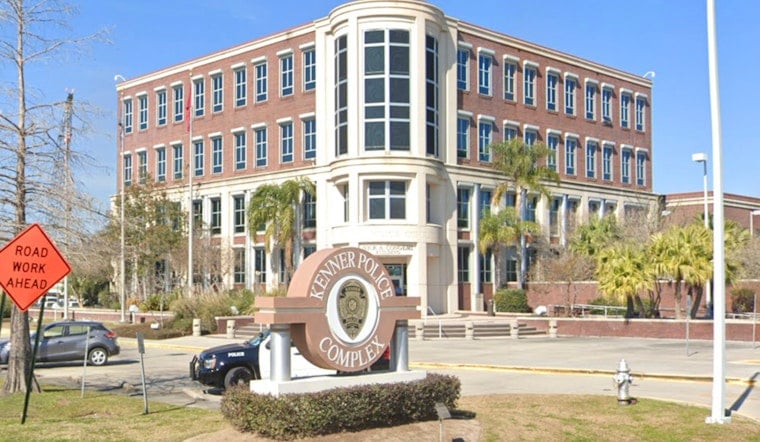
Kenner Police have received $590,020.83 from the Department of Homeland Security and Immigration and Customs Enforcement in nine separate payments since February, covering everything from a one-time vehicle stipend to overtime for tracking down migrant children assigned for welfare checks. The department, which operates on a $25.2 million city general-fund budget, is one of two New Orleans-area law enforcement agencies enrolled in the federal 287(g) program, and its police chief describes the arrangement as a straightforward trade of resources for cooperation.
According to records reviewed by NOLA.com, the payments began in February with a $212,500 transfer from DHS that included a $100,000 one-time vehicle stipend and a $112,500 officer-equipment stipend, the latter working out to about $7,500 per officer. ICE followed with a $225,000 payment in May that included two more $112,500 stipends for equipment and technology, and in July the department received $148,000 specifically tied to the Unaccompanied Alien Children Safety Verification Initiative, which requires local departments to conduct welfare checks on undocumented children and their sponsors. Six smaller reimbursement payments, ranging from $367.80 to $1,927.52, covered officer time spent processing immigration detainers and overtime spent locating children.
Kenner Police Chief Keith Conley has welcomed the federal resources, saying they help remove undocumented people with criminal backgrounds from the streets, and he has publicly supported stricter immigration enforcement under the Trump administration. Conley described the 287(g) partnership as a force multiplier, not a mission changer. Kenner Police spokesperson Mark McCormick said the DHS and ICE funds were not related to the department's participation in Operation Catahoula Crunch, the federal sweep that arrested more than 560 undocumented immigrants in the Kenner area last December and focused heavily on local neighborhoods and businesses, as previously reported in Hoodline's coverage of a House oversight hearing on the operation's fallout.
How Kenner's 287(g) Role Expanded
Kenner Police first joined the 287(g) program in March 2025 under the jail enforcement model, which lets officers share immigration information with ICE after an arrest. The department then joined the more expansive 287(g) task force model in October 2025, following Gretna Police, which joined the task force model in August 2025. That model, revived nationally under a fast-tracked 40-hour online training course, authorizes officers to question people about immigration status and make civil immigration arrests during routine duties, according to research from the National Immigration Forum.
Kenner now has 28 officers trained and eligible for 287(g) reimbursement out of roughly 148 sworn officers on the force. Gretna, by comparison, has 12 officers enrolled in the program but has received no payments from DHS or ICE thus far. Kenner Police processed roughly 300 immigration detainers between March and December 2025 and about 200 more since the start of 2026, seeking reimbursement for officer wages whenever an arrest involves someone with an immigration detainer.
Welfare Checks on Migrant Children
Under its assignment from the Unaccompanied Alien Children Safety Verification Initiative, Kenner Police were assigned 24 children for welfare checks and located four of them. The department has said these checks did not involve further intervention or immigration enforcement, such as deportations. Federal authorities describe the nationwide initiative, which covers an estimated 100,000 to 450,000 unaccompanied migrant children released to sponsors, as child welfare protection, though civil rights advocates have alleged the program is also used to build criminal and deportation cases against sponsors and households.
McCormick said Kenner Police does not conduct immigration checkpoints and denied that the payment structure amounts to a bounty hunter system. Kenner carries the largest Hispanic population per capita of any city in Louisiana, with Hispanic residents making up 29.5% of its roughly 64,000 people and foreign-born residents accounting for 21.1%, according to U.S. Census Bureau data — a foreign-born share more than double the statewide average.
Critics Question the Incentive Structure
Rachel Taber called the 287(g) payments disgusting but unsurprising, and said the arrangement incentivizes racial profiling, minor-violation stops and family separation. Critics have separately warned that the 287(g) agreement can put undocumented immigrants without violent criminal backgrounds at risk of deportation after nothing more than a minor traffic violation.
Kenner's compliance is also shaped by state law. Louisiana's Act 399, also known as Senate Bill 15, was signed in 2025 and criminalizes non-cooperation with federal immigration authorities, subjecting local officials to fines and imprisonment under state malfeasance statutes if they refuse to honor written ICE detainers, according to the American Press. The law was co-sponsored by state Rep. Debbie Villio of Kenner. It followed Louisiana's 2024 Senate Bill 388, signed by Gov. Jeff Landry, which made unauthorized entry or reentry into the state a standalone state crime, and the subsequent Operation Geaux executive order expanding state-level immigration enforcement.
A Parish-Line Divide
Kenner's posture stands in sharp contrast to Orleans Parish, where the New Orleans City Council established a Know Your Rights portal in December allowing residents to report potential federal enforcement abuses, as Hoodline reported in a story on the council's new reporting tool. Border Patrol agents were deployed to several Democratic-led cities in 2025 to conduct immigration sweeps, including Operation Catahoula Crunch, which brought roughly 250 federal agents into the New Orleans metro area in December with an initial target of 5,000 immigration arrests across Louisiana and Mississippi, according to The Guardian. Those Border Patrol operations ended at the start of 2026 after two U.S. citizens were fatally shot in Minneapolis.
The Marshall Project has reported that the Greater New Orleans area's foreign-born population, at roughly 10%, sits below the 14.3% national average, and that Louisiana was selected for federal sweeps largely because of supportive state leadership and existing detention infrastructure rather than population size. Kenner Police's continued participation in the 287(g) program and its federal task force role remain among the clearest local examples of that state-federal alignment playing out on the ground.





