

























































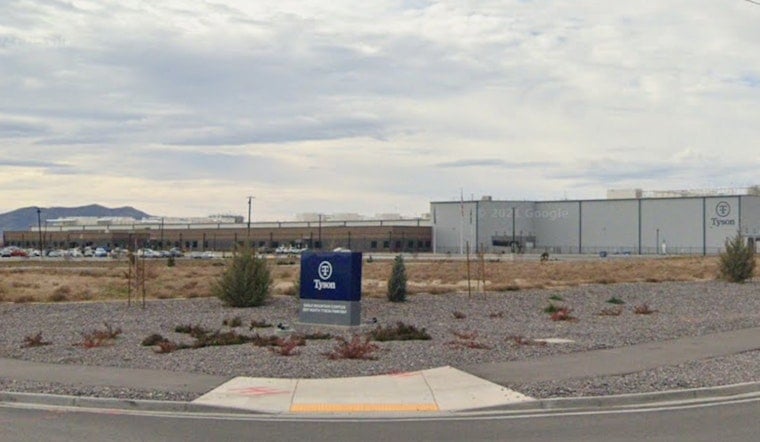
Tyson Foods shut down its beef packing plant in Joslin, Illinois on August 13 without advance notice to the local livestock suppliers who depended on it, ending harvest operations immediately even as the company kept the plant's 2,500 employees on regular pay through October 12. The closure came alongside the shutdown of Tyson's case-ready facility in Eagle Mountain, Utah, and a decision to seek a buyer for its Pasco, Washington plant, as the company scrambles to adapt its beef business to a national cattle herd that has shrunk to levels not seen in 75 years.
According to Fox 10 Phoenix, Tyson announced plans to close the two facilities and to sell the third as part of a broader restructuring of its beef operations, citing historically tight cattle supplies and rising costs across the meatpacking industry. Tyson Foods CEO Donnie King said beef has not performed as expected, according to the outlet, as ranchers have reduced their herds in response to drought and elevated feed costs. The company says it will help employees affected by the closures apply for open positions at other Tyson facilities.
A Herd at Its Smallest Since 1951
The scale of the supply problem behind Tyson's decision is stark. The USDA's January 2026 Cattle Inventory report found the total U.S. cattle and calf population had dropped to 86.2 million head, the smallest national herd since 1951, while the 2025 calf crop fell to 32.9 million head, its lowest level since 1941, according to the Texas Farm Bureau. Multi-year droughts, elevated feed costs, and reduced heifer retention drove producers to liquidate herds rather than hold back replacement cattle, the bureau's data shows.
The squeeze tightened further when the U.S. closed its border to Mexican feeder cattle over New World screwworm concerns and temporarily raised tariffs on Brazilian beef imports, according to Drovers. Those trade restrictions coincided with the domestic herd contraction, leaving meatpackers with fewer alternative sources of live cattle just as competition for existing supply intensified. Limited heifer retention indicates constrained cattle supplies could continue, Tyson said, per Fox 10 Phoenix's report.
Financial Losses Driving Consolidation
The cattle shortage has hit Tyson's bottom line hard. The company expanded its projected fiscal year 2026 beef segment operating losses to between $500 million and $650 million, according to Talk Business & Politics. Analysts at Stephens Inc. estimated the plant closures and consolidation could yield $100 million to $150 million in annual cost savings, the outlet reported, as record-high live cattle acquisition costs have compressed beef packing margins across North America.
Tyson is anchoring its beef operations around three central hubs — Amarillo, Texas; Holcomb, Kansas; and Dakota City, Nebraska — where it says it has ample capacity to grow and will maintain a similar level of cattle harvesting across what it calls a more efficient and modern network, per Fox 10 Phoenix. Production capacity from the shuttered Illinois and Utah sites is expected to shift to those other locations. Tyson also plans to restore a second shift at its Amarillo plant as cattle availability permits, reversing a late-2025 reduction that had scaled the facility down to a single shift and affected 1,700 workers, the Shelby Report notes.
Ripple Effects for Feeders and Grocery Shoppers
The Joslin plant had slaughtered roughly 3,000 to 3,100 head of cattle per day before the shutdown, and its abrupt closure leaves Midwestern cattle feeders facing extra transport distances of 160 to 400 miles to haul market-ready cattle to out-of-state facilities, according to Farm Progress. Livestock analysts cited by the outlet forecast local cattle bids could fall by $200 to $300 per head as feedlots absorb the added freight costs and lose local processing competition.
A similar dynamic could unfold in the Pacific Northwest if Tyson cannot find a buyer for Pasco. That plant processes roughly 2,300 cattle per day and represents about half of the region's large-scale beef slaughter capacity, drawing much of its live supply from Western Canada, according to Real Agriculture. A permanent shutdown there would leave AgriBeef's Toppenish facility as the region's sole remaining major slaughter plant, the outlet reported.
The Illinois and Utah closures follow Tyson's November 2025 decision to permanently close its Lexington, Nebraska beef plant effective January 2026, eliminating 3,200 jobs in a town of 11,500 residents and removing a facility that had slaughtered nearly 5,000 cattle daily. Tyson had also invested $300 million in 2019 to build the Eagle Mountain, Utah case-ready facility, designed to house between 800 and 1,200 jobs, before ordering its operations ended this month.
Consumers Still Feeling the Squeeze
For shoppers, the fallout from the cattle shortage has already been visible at the grocery counter. USDA Economic Research Service forecasts published in early 2026 projected retail beef and veal prices would climb 10.1% for the year, following retail ground beef hitting a record average of $6.70 per pound in spring 2026, as Hoodline previously reported. Reduced packing capacity from the latest round of closures is likely to sustain that pressure on household food budgets into next year.
The restructuring also echoes Tyson's broader footprint adjustments across its business; the company closed a Georgia poultry plant earlier this year, as per Hoodline. With cattle supplies still historically tight and U.S. consumers contending with elevated beef prices, Tyson has framed the Joslin, Eagle Mountain, and Pasco decisions as necessary steps toward a more concentrated, modern network built around its Nebraska, Kansas, and Texas hubs.





