

























































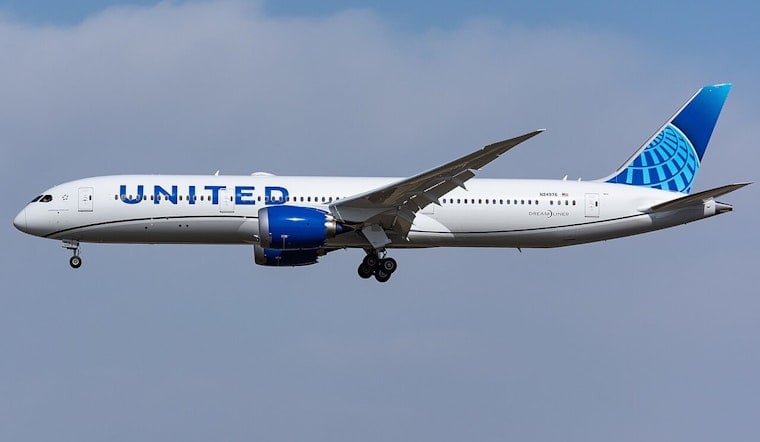
A United Airlines flight bound for Phoenix aborted its takeoff at O'Hare International Airport on Thursday after a tire blew, forcing 161 passengers and six crew members to deplane directly onto the runway. Buses stood by to ferry everyone back to the terminal as the disabled Boeing 737-900 sat on the tarmac, triggering delays that rippled across the airport.
United Airlines Flight 455 departed from O'Hare and was climbing toward Phoenix when the crew aborted takeoff after the tire failure, according to NBC 5 Chicago. The Federal Aviation Administration confirmed the flight safely aborted takeoff and said passengers and crew deplaned on the runway, though the agency stopped short of confirming that the disabled aircraft blocking the runway was in fact Flight 455. The FAA is investigating the incident, and video posted to social media showed a large emergency response at the airport.
United said in a statement that it was arranging another aircraft to get the stranded Phoenix-bound passengers to their destination later in the day. Passengers and crew members were bused to the terminal once ground crews cleared them from the runway.
Why Aborting Before Liftoff Is the Safer Call
Pilots are trained to reject a takeoff only before the aircraft reaches its calculated “V1” decision speed, since aborting above that threshold sharply raises the odds of a runway excursion, according to Federal Aviation Administration guidance. Boeing 737 Next-Generation aircraft, the family that includes the 737-900 involved Thursday, run main landing gear tires at operating pressures between 185 and 217 psi filled with pure nitrogen rather than ambient air, a design meant to prevent thermal expansion and internal wheel combustion during hard braking, per the The Boeing 737 Technical Site. That engineering context helps explain why a tire failure at speed demands an immediate, practiced response rather than a judgment call.
A disabled aircraft on a runway forces a rapid, resource-heavy response even after everyone is safely off the plane. FAA certification standards for airports like O'Hare require on-site Aircraft Rescue and Fire Fighting crews capable of reaching the midpoint of any active runway within three minutes of an alarm, under 14 CFR Part 139. Separate FAA standards also require immediate foreign object debris sweeps and physical runway inspections after a tire blowout, so crews can clear shredded rubber fragments before the runway reopens to other traffic.
Delays Ripple Across an Already Strained Hub
Flights headed to O'Hare were delayed by an average of 25 minutes as of 3:50 p.m., according to FAA data cited by NBC 5 Chicago, with the agency attributing the slowdown directly to the disabled aircraft occupying the runway. The disruption lands on an airport that is already stretched thin: O'Hare handled roughly 84.85 million passengers and more than 857,000 aircraft movements in 2025, averaging about 2,340 flights a day, making it one of the busiest airports in the world by total operations, per Road Genius.
United has also expanded its O'Hare footprint to a record peak of up to 750 daily departures this summer, adding 170 daily flights compared with last year and making the airport its single largest hub, according to Forbes. That density means a single blocked runway can cascade into delays for dozens of connecting flights across the schedule.
Thursday's incident also comes just three days after severe storms forced FAA ground stops at O'Hare that triggered more than 2,000 flight delays nationwide, as Hoodline reported earlier this week. It follows a separate United tire failure exactly one week earlier, when Flight 1189, a Boeing 737-800 bound for Los Cabos, Mexico, turned around and deplaned 165 passengers on the tarmac via airstairs after sustaining tire damage during takeoff from San Francisco International Airport, according to CBS News.
A Pattern of Ground Incidents at United's Hubs
The Chicago runway closure adds to a string of recent United ground safety incidents. In October 2025, two United aircraft clipped wings while taxiing on the O'Hare airfield, prompting an FAA investigation and 40-minute deplaning delays. In January 2025, a United Boeing 737 aborted takeoff at O'Hare after striking a coyote on the runway, with the aircraft returning safely and passengers rerouted. Further back, in March 2024, a United Boeing 777 lost a main landing gear tire during takeoff from San Francisco International Airport; the tire fell into an airport parking lot and crushed several parked vehicles before the aircraft diverted safely.
It remains unclear what caused Thursday's tire damage, whether it stemmed from foreign object debris or a mechanical issue, and how long the O'Hare runway stayed closed for inspection. United's plan to fly the stranded Phoenix-bound travelers out later Thursday was the only concrete update the airline had offered as of the FAA's afternoon delay report.




.jpg)