

























































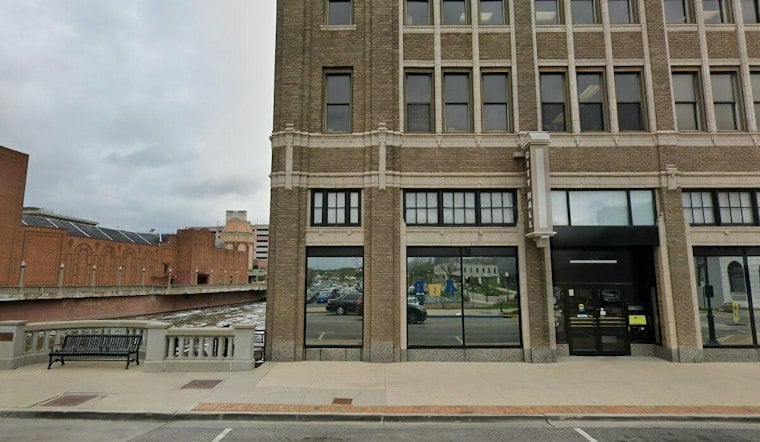
Aurora is staring down a projected $9 million to $10 million general-fund deficit for 2027, and Mayor John Laesch is telling residents the city has already cut about as much as it can. More than 40 people showed up to a budget town hall at the Aurora Public Works facility last Saturday to hear city officials lay out the numbers and field questions about what comes next.
The gap has actually narrowed since August, when officials projected a $14.3 million shortfall, according to the Chicago Tribune. But Laesch made clear the improvement doesn't change the fundamental math: the city cannot cut its way out of the 2027 deficit, and Aurora will need to look at other revenue streams, including a possible property tax increase, the paper reported. Projected 2027 revenue stands at $553.9 million, with property taxes expected to make up just over 20% of that total.
A Deficit Years in the Making
The current squeeze traces back to a fiscal picture Laesch inherited when he took office in May 2025 after defeating two-term Mayor Richard Irvin in an April runoff. At the time, he warned residents that an $88 million municipal shortfall left property tax increases on the table, according to FOX 32 Chicago. Aurora had been spending more than it took in for years and had leaned on long-term funds to cover operational costs, per the Beacon-News report, and the city now plans to replenish those reserves in 2026.
Municipal headcount had also swelled, growing from 829 full-time employees in 2017 to 1,097 by 2025, which prompted the mayor's office to install a hiring freeze — dubbed a “hiring slushie” — last August, the Daily Herald reported at the time. That freeze preceded roughly 140 city position eliminations in the approved 2026 budget, part of a broader belt-tightening.
Public Safety Cuts Sparked Friction
Those austerity measures did not land smoothly with every department. The union representing Aurora firefighters, IAFF Local 99, publicly opposed the mayor's 2026 budget proposal last November after it reduced fire department positions to 250 full-time employees and recommended pulling two of the city's four ladder trucks out of service, according to CBS News Chicago. The city is now addressing increased fire-department overtime costs as part of the 2027 planning process, and Aurora is currently negotiating two labor union contracts — one with IAFF Local 99 and another with AFSCME Local 3298, which represents municipal workers.
City finance director Stacy Peterson underscored the stakes of the ongoing cuts, saying the city cannot keep spending if expenditures continue to outpace revenue. Left unaddressed, officials project the budget gap could balloon to nearly $28.5 million by 2031. Aurora is also weighing whether to restore funding to departments that were cut deeply in 2025, alongside the newer reductions.
Casino Windfall Won't Plug the Hole
One bright spot in the city's finances won't be used to close the gap. PENN Entertainment officially opened its new $360 million land-based Hollywood Casino Aurora near Interstate 88 and North Farnsworth Avenue in June, replacing the riverboat casino that had operated on the Fox River since 1993. The city expects the relocated casino to generate about $9 million in additional gaming-tax revenue for 2026 and roughly $1 million per month after that, but Aurora does not plan to use the increased casino revenue to eliminate the budget deficit. Laesch has said casino gaming revenue may not remain consistent over time, and officials instead plan to direct it toward one-time costs or aldermanic ward funds. The city must still decide whether to demolish the old Hollywood Casino building downtown along with its associated parking garages.
Water Mains, Downtown Buildings and Clean Energy
Laesch has framed the 2027 budget around four priorities: core city services, infrastructure repair, downtown and the arts, and clean energy and jobs. Infrastructure needs are steep — the pace of water main breaks jumped 50% in 2026, and the city says it needs to replace around eight miles of water main annually, up from the roughly 2.5 miles per year it has funded in the past. The infrastructure discussion also includes lead service line replacement.
Other capital items on the table include a possible noise barrier on Orchard Road, redevelopment of the Broadway corridor, neighborhood street improvements, and upgrades to the city's fiber optic network. Downtown, Aurora also needs to rehabilitate aging buildings, a priority that dovetails with the city's recent push to renew Special Service Area 1, the downtown taxing district Hoodline covered in its report on the proposed 1% downtown tax. Laesch may also propose a referendum on a city-owned renewable-energy electrical grid, consistent with the “people and planet over profit” framing he introduced during his first State of the City address in April, when he also created a new Office of Sustainability, Economic Development and Business Opportunity.
Civic Center Funding on a Ramp-Down Path
One of the more notable line items in the 2027 discussion involves the Aurora Civic Center Authority, which owns the Paramount Theatre, Copley Theatre, Paramount School of the Arts and North Island Center, and manages Riveredge Park and Stolp Island Theatre. The city plans to decrease funding to the authority and ramp it down further over time, with the goal of the organization eventually becoming financially stable and self-sustaining. At the same time, the city might increase funding for facilities, development services and legal departments.
Officials have roughly a week left to finalize budget decisions, with plans to prepare a draft budget for city council review by October 20. The Aurora City Council Finance Committee is scheduled to meet October 20. The fiscal debate arrives against a backdrop of political tension: a grassroots group called Aurora for Change launched a petition drive in May seeking a recall referendum against the mayor and at-large aldermen, a campaign Hoodline detailed in its coverage of the recall petition effort that followed the administration's earlier fiscal warnings.





