

























































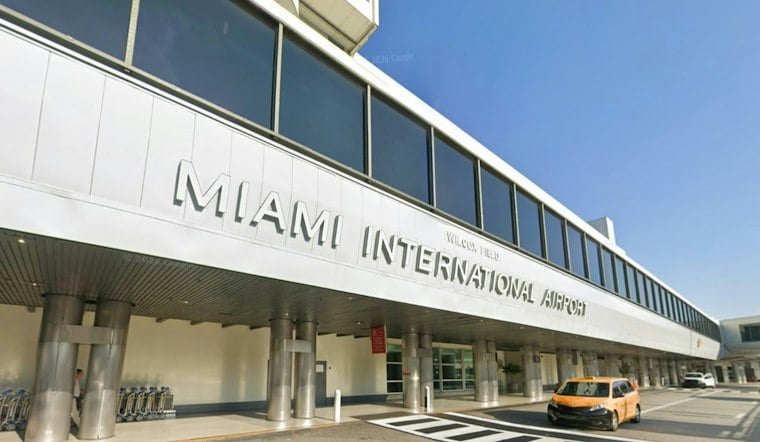
Eight people were injured early Friday when Avianca Flight 42, traveling from Medellín, Colombia, to New York’s John F. Kennedy International Airport, encountered turbulence and diverted to Miami International Airport. Miami-Dade Fire Rescue officials said the eight were hurt after encountering rough air while traveling on the flight, though the extent of their injuries remained unclear in the immediate aftermath.
According to WSVN 7News, rescue crews took all eight people to hospitals. Several patients were taken to Jackson Memorial Hospital, and, as of 6 a.m., one had been taken to Ryder Trauma Center. Avianca Flight 42 was traveling from Medellín, Colombia, to New York’s JFK airport. Miami-Dade Fire Rescue said it was still working to provide more information about the incident. Miami International Airport was also contacted for additional details.
Why Victims Were Rushed To Ryder Trauma Center
The choice of hospital was not incidental. Ryder Trauma Center at Jackson Memorial Hospital is Miami-Dade County's only Level I trauma center verified by the American College of Surgeons, treating roughly 5,500 critical adult and pediatric patients annually, according to Jackson Health System. The hospital's emergency department handles more than 120,000 patient visits a year and serves as the primary designated trauma receiving facility for medical emergencies originating at Miami International Airport, per the same health system.
In this incident, one patient had been taken to Ryder Trauma Center by 6 a.m. The hospital also operates in partnership with the University of Miami Miller School of Medicine, adding another layer of specialized care capacity for trauma cases arriving from the airport.
A Pattern Of Rough Air Over South Florida
Thursday's incident is not the first time severe turbulence has disrupted flights in or near Miami this year. In June, an American Airlines flight from San Juan to Charlotte was forced to divert to Miami International Airport after turbulence left a passenger injured, as Hoodline previously reported. MIA is a common diversion point for flights to and from the Caribbean.
In June 2025, American Airlines Flight 1286 encountered turbulence shortly after departing Miami International Airport, and five people were transported to a hospital. Convective turbulence can occur in connection with thunderstorms.
Turbulence Remains Aviation's Top Safety Hazard
Nationally, turbulence is far from a rare nuisance. Federal Aviation Administration data shows it accounted for 36% of all commercial airline in-flight incidents in the United States between 2008 and 2022, making it the leading cause of nonfatal aviation accidents, according to AVTECH Safety. The FAA relies on pilot reports and real-time atmospheric data to warn air traffic control of hazardous conditions.
National Transportation Safety Board research cited by Forbes found that 78% of serious crew injuries occurred while crew members were performing their duties. Hoodline's coverage of a Bayview man's turbulence-related seat belt failure recommends keeping a seat belt fastened.
Scientists have also linked the growing frequency of severe turbulence to a warming atmosphere. Research led by the University of Reading found that severe clear-air turbulence over major transatlantic routes increased by 55% between 1979 and 2020 due to climate-driven increases in atmospheric wind shear, according to Global Aerospace. Clear-air turbulence occurs without visible clouds and cannot be detected by conventional onboard weather radar, making it especially difficult for pilots to anticipate.
The Financial Toll On Airlines
AVTECH Safety estimates that turbulence-related costs for an airline range from $250,000 to $2 million annually and reports that industry-wide U.S. costs can reach $500 million annually.



