

























































Utah schools logged 537 substantial threats during the 2025-26 school year, a number that has nearly quadrupled since the 143 recorded just two school years earlier, and state lawmakers say the system meant to catch those warning signs before they turn violent isn't working the way it's supposed to. During an interim committee hearing in Salt Lake City last Wednesday, legislators and law enforcement officials laid out a pattern of inconsistent follow-up and unclear accountability that has left some credible threats without a clear owner once they're identified.
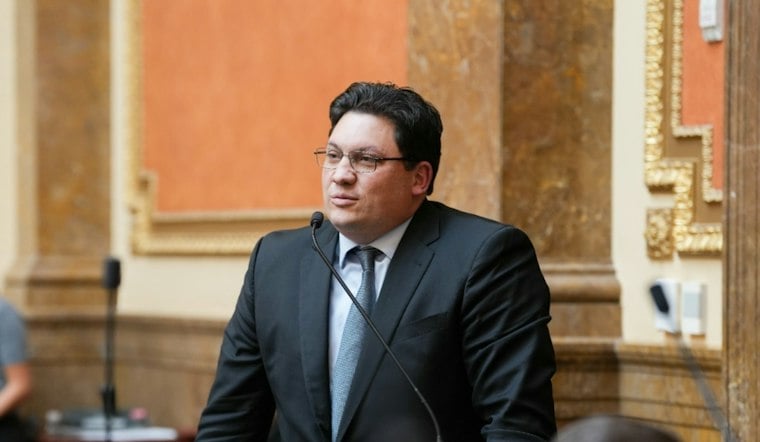
The hearing, held before the Law Enforcement and Criminal Justice Interim Committee, centered on whether warning signs are being missed because threat assessments aren't happening consistently and because responsibility for tracking a flagged student afterward isn't clearly assigned, according to KUTV. State Representative Ryan Wilcox, who represents District 7, told the station that threat assessment remains a major unresolved gap, and that the assessments state law already requires for every credible threat simply aren't being carried out consistently from school to school.
“We can’t let those fall through the cracks,” Wilcox warned, per the station's report. He added that he plans to share a specific case with fellow lawmakers that he described as terrifying, though he did not detail it publicly during the open portion of Wednesday's hearing.
Closed-Door Testimony and an Ongoing Investigation
Before the public hearing, lawmakers and law enforcement members entered a closed session to hear testimony tied to an ongoing investigation into how schools have handled threats, Wilcox said, according to the same KUTV account. Utah State Security Chief Matt Pennington told the committee that one gap is the incorrect assembly of multidisciplinary response teams, the groups of educators, counselors and law enforcement meant to jointly evaluate a threat's severity.
Pennington also said it isn't always clear who is responsible for tracking a student once a threat involving them has been recognized. He reported that there have recently been a couple of significant incidents in which students were present at school and later were no longer there, with indicators and warning signs present but no crime committed — details the station's report did not expand on further. Lawmakers finished the hearing without taking action, and the article notes they plan to continue debating possible new laws to close these gaps during the 2027 legislative session.
How the Numbers Climbed
The scale of the increase is central to why lawmakers are revisiting the issue now. Utah schools recorded 143 substantial threats in the 2023-24 school year, a number that rose to 445 the following year and climbed again to 537 in 2025-26, per KUTV's review of state data. Public schools bore the brunt of it, accounting for 463 of those 537 identified threats this past school year.
The Utah Department of Public Safety's Statewide Information and Analysis Center, which compiles the figures, defines a substantial threat as one made with intent to cause harm or a threatening incident that could significantly disrupt school operations. Of the threats recorded in 2025-26, more than 200 had an unknown motive and 98 were classified as grievance or frustration, the station reported. The same report noted that recent swatting calls — false reports meant to trigger a major law enforcement response — have targeted multiple Utah schools, prompting separate investigations.
A Statewide System Built Three Years Ago
Utah's current framework dates to 2023, when the state directed every public school to adopt the Comprehensive School Threat Assessment Guidelines model and required each school to designate a school safety specialist to run the program, according to KSL. The rollout came with $75 million in one-time state funding for school safety under HB61, KSL reported at the time. That push followed a sharp rise in reported threats and intimidation statewide, from 1,094 cases in 2021 to 2,744 in 2022, and a five-year high of 4,641 fighting incidents recorded that same year.
Research cited by KSL underscores why early intervention matters: a study referenced in its reporting found that 92% of perpetrators of mass shootings at K-12 schools had communicated their intent to harm someone before the attack. National nonprofit Everytown Research notes that effective threat-assessment programs convene multidisciplinary teams to evaluate a student in crisis and deploy interventions meant to prevent violence, rather than defaulting to discipline or the criminal justice system. The group emphasizes that successful programs instead rely on trauma-informed treatment, support and resources.
Not every flagged threat turns out to be serious. A comparison cited in KSL's reporting found that across 60 Florida school districts serving 2.5 million students, 81.8% of the 22,929 threat assessments conducted during the 2021-2022 school year were ultimately classified as not serious or not a threat at all — a data point Utah officials may look to as they weigh how to calibrate their own system heading into 2027.





