

























































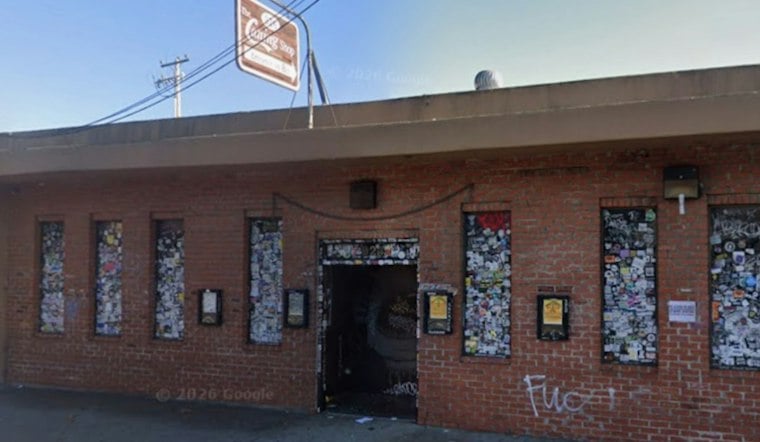
Gilman’s future is at stake
The collective behind 924 Gilman is campaigning to raise $5 million to buy the Berkeley property from its landlord, amid pressure on independent music venues across the Bay Area, according to Berkeleyside. The outlet also describes how zines by Aaron Cometbus and photographs by Murray Bowles have helped document the venue’s history. Gilman is among the Bay Area sites represented in a new book based on Cornell University’s punk archives.
Local materials in a national history
Published March 15 by Cornell University Press, We’re Having Much More Fun: Punk Archives for the Present from CBGB to Gilman and Beyond was co-edited by Judith A. Peraino and Tom McEnaney. Cornell Chronicle reports that the book draws on punk-related materials in Cornell University Library’s Rare and Manuscript Collections. Berkeley News says it presents more than 400 objects alongside interviews and essays, with Bay Area material connected to 924 Gilman Street, the Berkeley Aquatic Center and UC Berkeley’s Sproul Plaza. The book also covers New York, Los Angeles and scenes beyond the Bay Area, according to the Cornell Chronicle.
A collection built through teaching and preservation
The Cornell collection predates the book: professor and curator Katherine Reagan began assembling punk materials in the early 2000s, according to the Chronicle. Berkeley News reports that McEnaney’s punk course at Cornell began in 2014 and that a student connected him with Aaron Cometbus, who later sent his collection to the university. Cornell’s finding aid describes that collection as including zines, flyers, photographs, correspondence and other records; it lists more than 59 issues of Cometbus created between 1981 and 2022. The Cornell University Library finding aid provides the collection details.
The book’s account also challenges the idea that punk history belongs chiefly to white, straight men. Berkeley News describes the volume as highlighting women, queer people and people of color, while the authors told Ithaca.com that they followed the evidence in the archive toward a history spanning generations and identities. Those descriptions and the specific account of the book’s origins remain based on published interviews and institutional reporting, rather than new reporting for this article.





